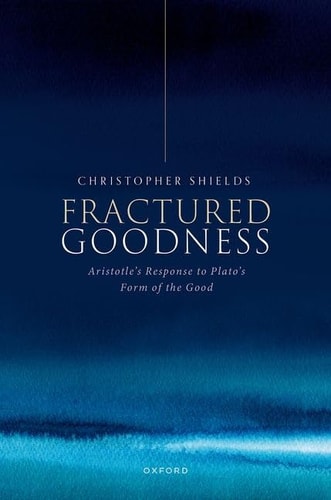
Fractured Goodness: Aristotle's Response to Plato's Form of the Good
0
0
As an Amazon Associate and affiliate partner, Menrva Books earns from qualifying purchases. Learn more
Author Description
Aristotle offers a searing rejection of Plato's commitment to a Form of the Good; core among his complaints is that goodness is not univocal, that is, that there is no single essence-specifying account of goodness covering all the many varieties of goodness there are. Aristotle's anti-Platonic arguments have been variously received: many of his readers regard them as wholly successful while many others maintain they are abject failures. This volume reconstructs and assesses these arguments afresh and asks a simple question: if they are sound, what is left for Aristotle? In particular, what principles does he have to vouchsafe the commensurability of the good things he himself regards as commensurable?
Menrva's Summary
THE THESIS
This volume investigates whether Aristotle's rejection of Plato's Form of the Good is logically sound and what implications such a rejection holds for his own ethical framework. Christopher John Shields, a scholar of ancient philosophy, examines the specific arguments Aristotle employs to dismantle the notion of a univocal essence of goodness. By analyzing these anti-Platonic critiques, the author seeks to determine how Aristotle maintains the commensurability of goods within his own system without relying on a singular, universal Form.
THE SCOPE MAP
What You Will Find
- A detailed reconstruction of Aristotle's arguments against the Platonic Form of the Good.
- An assessment of the logical validity of Aristotle's claims regarding the non-univocal nature of goodness.
- An exploration of the principles Aristotle uses to categorize and relate various good things.
- A critical analysis of the historical and contemporary reception of these specific Aristotelian arguments.
THE AUTHORITY PERSPECTIVE
Scholars and students of ancient philosophy recognize this work as a rigorous analytical treatment of a foundational debate in ethics. Readers frequently note the technical density of the prose, which is intended for those already familiar with the primary texts of Plato and Aristotle.
Page Count:
304
Publication Date:
2024-09-20
Publisher:
Oxford University Press
ISBN-10:
0198915691
ISBN-13:
9780198915690
Politics
Philosophy
History & Schools of Thought
Ethics & Morality
Metaphysics
Ethics
Community Tags
Similar Books