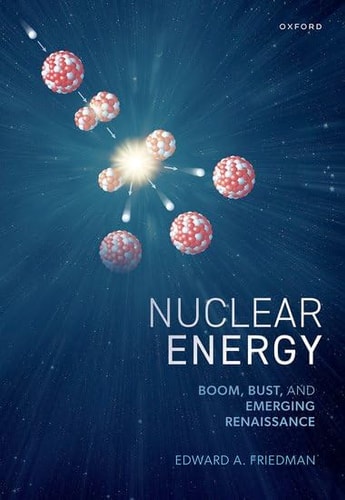
Nuclear Energy: Boom, Bust, and Emerging Renaissance
0
0
As an Amazon Associate and affiliate partner, Menrva Books earns from qualifying purchases. Learn more
Author Description
Questions of energy policy are among the most central and consequential of any confronting society today. While the role of nuclear energy is key, there is little understanding and much misinformation regarding its nature and its potential. Impeding the emergence of informed discourse on this topic is the lack of clear, objective information. Nuclear Energy: Boom, Bust and Emerging Renaissance helps answer the question of "What role can nuclear energy play in meeting the global warming challenge?"Currently, the general public has little access to developments that have been made in nuclear energy technology since the accidents of Chernobyl and Fukushima. These new designs promise to come to fruition around 2030, as the 28th United Nations Conference on Climate Change (COP28) witnessed a call for a tripling of the use of nuclear power by 2050. Edward A. Friedman places the troubling issues of nuclear power into both historical and forward-looking contexts, first by exploring the consequences since the first reactor was connected to a public electrical grid, and then by envisioning radically new designs that promise a safe path toward achieving net zero carbon emissions. With non-technical explanations, this book provides insight of how nuclear reactor technology holds the promise of making significant contributions to the struggle against global warming, and why dozens of nations are engaged in innovation and expansion of nuclear technology.Timely and insightful, Nuclear Energy will appeal to the lay reader while also serving as a college level text for both non-science students studying energy policy or sustainability and students of science and technology.
Menrva's Summary
THE THESIS
This book investigates the potential role of nuclear energy in addressing the global climate crisis by evaluating its historical trajectory and future technological viability. Edward A. Friedman, drawing on his expertise in science and technology, provides a comprehensive analysis of the industry's evolution from early grid integration to modern innovations. The text argues that despite past accidents and public misconceptions, advancements in reactor design offer a credible pathway toward achieving net-zero carbon emissions by 2050. By synthesizing historical data with current policy shifts, the author constructs a framework for understanding nuclear power as a critical component of global energy strategy.
THE SCOPE MAP
What You Will Find
- Historical analysis of nuclear power development from the first grid-connected reactors to the present day.
- Examination of the impact of major nuclear accidents, including Chernobyl and Fukushima, on public perception and safety standards.
- Overview of emerging reactor technologies and designs projected for implementation by 2030.
- Discussion of international energy policy, specifically referencing the COP28 climate goals and the push for nuclear expansion.
THE AUTHORITY PERSPECTIVE
Experts and educators recognize this work as a valuable resource for bridging the gap between technical complexity and public policy discourse. Readers frequently note that the prose remains accessible to non-science students while providing sufficient depth for those studying sustainability and energy systems.
Page Count:
256
Publication Date:
2025-10-03
Publisher:
Oxford University Press
ISBN-10:
0198925786
ISBN-13:
9780198925781
History
Science
Technology
Energy policy
Engineering
Nuclear Physics
Sustainability
Energy Production & Extraction
Community Tags
Similar Books