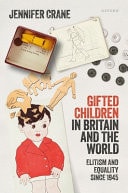
'Gifted Children' in Britain and the World: Elitism and Equality since 1945
0
0
As an Amazon Associate and affiliate partner, Menrva Books earns from qualifying purchases. Learn more
Author Description
The Idea That A Child Is Intellectually 'gifted' Has A Social And Cultural History. This Book Analyses That Social History At Multiple Scales, And Makes The 'voices' Of The Gifted Young Themselves Central. In Daily Encounters, Those Labelled 'gifted' Sometimes Loved This Label, And Felt Special In Comparison To Peers At School And Siblings At Home. For Others, 'gifted' Was A Silly Or Embarrassing Label, And Many Questioned The Idea Of Separating Off Young People In Terms Of Intelligence, As Well As Specific Forms Of Testing. Ideas Of The Gifted Child Also Reshaped Family Lives - Parents Dedicated Time To Providing Special Leisure Spaces, Running Them In Their Own Homes And Taking Their Children Significant Distances To Spend Time With Others. Voluntary Organisations Were Critical Here, As The Network Through Which Young People And Adults Encountered The Term, 'gifted', And Lived And Created It Relationally. Voluntary Organisations, Looking To Gain Attention And Visibility, Also Critically Shaped The Idea That The Gifted Young Were Elites Of 'the Future', Central To Answering Challenges Of Economic Decline, Global Warfare, Or Humanitarian Aid. The Hopes Placed On Gifted Children Between The 1960s And The 1990s Were Often Sky High - Yet Many Gifted Young Still Felt That The Community 'wasted' Their Talents, And Did Not Support Them. This Book, Then, Provides New Perspectives On The Tensions Between Elitism And Equality In Modern Britain. It Also Offers Vivid Stories Of Optimism, Hope, Disappointment, And Criticism, In Which Young People Themselves Play A Central Role-- Provided By Publisher.
Menrva's Summary
THE THESIS
This book investigates how the concept of the 'gifted' child emerged as a social and cultural construct in Britain from 1945 to the present, examining the inherent tensions between elitism and equality. Jennifer Crane, a historian specializing in the social history of childhood and welfare, utilizes archival research and personal accounts to map the evolution of giftedness as a label. She argues that the identification of gifted children was not merely an educational policy but a relational process involving families, voluntary organizations, and broader societal anxieties regarding economic and global stability.
THE SCOPE MAP
What You Will Find
- Historical analysis of the 'gifted' label in British society from 1945 through the 1990s.
- Examination of the role of voluntary organizations in creating networks for gifted youth.
- Qualitative evidence derived from the personal voices and lived experiences of children labeled as gifted.
- Exploration of the impact of gifted identification on family dynamics and domestic leisure spaces.
THE AUTHORITY PERSPECTIVE
Scholars in the history of education and childhood studies recognize this work for its focus on the subjective experiences of children within institutional frameworks. Readers frequently note the balance between macro-level policy analysis and the intimate, often critical, perspectives of the young people labeled as gifted.
Page Count:
224
Publication Date:
2025-05-28
Publisher:
Oxford University Press
ISBN-10:
0198928858
ISBN-13:
9780198928850
Politics
History
Race Relations
Educational Resources
Sociology
Education
British History
Community Tags
Similar Books