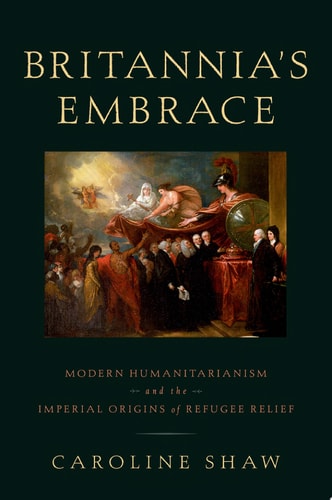
Britannia's Embrace
0
0
As an Amazon Associate and affiliate partner, Menrva Books earns from qualifying purchases. Learn more
Author Description
On The Eve Of The American Revolution, The Refugee Was, According To British Tradition, A Protestant Who Sought Shelter From Continental Persecution. By The Turn Of The Twentieth Century, However, British Refuge Would Be Celebrated Internationally As Being Open To All Persecuted Foreigners. Britain Had Become A Haven For Fugitives As Diverse As Karl Marx And Louis Napoleon, Simón Bolívar And Frederick Douglass. How And Why Did The Refugee Category Expand? How, In A Period When No Law Forbade Foreigners Entry To Britain, Did The Refugee Emerge As A Category For Humanitarian And Political Action? Why Did The Plight Of These Particular Foreigners Become Such A Characteristically British Concern? Current Understandings About The Origins Of Refuge Have Focused On The Period After 1914. Britannia's Embrace Offers The First Historical Analysis Of The Origins Of This Modern Humanitarian Norm In The Long Nineteenth Century. At A Time When Britons Were Reshaping Their Own Political Culture, This Charitable Endeavor Became Constitutive Of What It Meant To Be Liberal On The Global Stage. Like British Anti-slavery, Its Sister Movement, Campaigning On Behalf Of Foreign Refugees Seemed To Give Purpose To The Growing Empire And The Resources Of Empire Gave It Greater Strength. By The Dawn Of The Twentieth Century, British Efforts On Behalf Of Persecuted Foreigners Declined Precipitously, But Its Legacies In Law And In Modern Humanitarian Politics Would Be Long-lasting. In Telling This Story, Britannia's Embrace Puts Refugee Relief Front And Center In Histories Of Human Rights And International Law And Of Studies Of Britain In The World. In So Doing, It Describes The Dynamic Relationship Between Law, Resources, And Moral Storytelling That Remains Critical To Humanitarianism Today.
Menrva's Summary
THE THESIS
This book investigates how the concept of the refugee evolved from a narrow religious category into a broad humanitarian and political identity within Britain during the long nineteenth century. Author Caroline Shaw, a historian of modern Britain, utilizes archival research and legal analysis to argue that the British commitment to foreign refugees was a deliberate construction of liberal political identity. She posits that this movement, parallel to the anti-slavery campaign, served to define Britain's moral standing on the global stage while utilizing the resources of the growing empire to sustain its influence.
THE SCOPE MAP
What You Will Find
- Analysis of the transition from Protestant-focused refuge to universal humanitarianism.
- Examination of the political and legal frameworks governing foreign entry into Britain.
- Case studies of diverse figures including Karl Marx, Louis Napoleon, and Frederick Douglass.
- Exploration of the intersection between imperial power and moral advocacy.
Scope Limits
- The study focuses primarily on the long nineteenth century and does not provide an in-depth analysis of refugee policy after 1914.
- The text does not cover the internal domestic policies regarding immigration outside of the specific context of political and humanitarian refuge.
THE AUTHORITY PERSPECTIVE
Historians and scholars of international relations identify this work as a significant contribution to the history of human rights and British foreign policy. Readers frequently note the academic rigor of the research and the clarity with which the author connects nineteenth-century moral storytelling to modern humanitarian practices.
Page Count:
320
Publication Date:
2015-01-01
Publisher:
Oxford University Press
ISBN-10:
0190200995
ISBN-13:
9780190200992
History
British History
International Law
Nineteenth century
Community Tags
Similar Books