Fin-de-siècle Russia and Chinese Aesthetics: The Other is the Universal
0
0
As an Amazon Associate and affiliate partner, Menrva Books earns from qualifying purchases. Learn more
Author Description
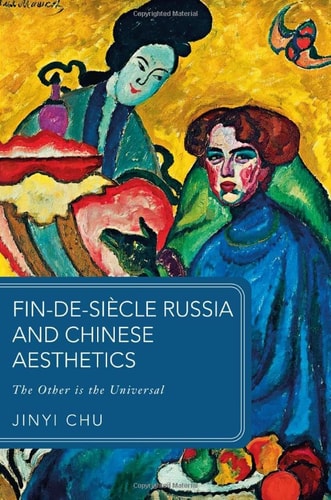
Many are familiar with European modernists' interest in Chinese art and poetry, however less well known is that Russian literature and art at the turn of 20th century also flourished in a sustained dialogue with China. In Fin-de-siècle Russia and Chinese Aesthetics, Jinyi Chu reconsiders the place of Russia in the genealogy of global modernism by exploring the enduring impact of China on pre-revolutionary Russian culture. This book argues that fin-de-siècle Russian ideas about increasing global cultural and socioeconomic interconnectedness emerged from their unsettling encounters with China.Drawing on literary texts, paintings, advertisements, official documents, and archival work in Russia, China, France, and the United States, Chu reconstructs surprising stories about cultural interactions. From Innokenty Annensky's encounter with a Tibetan monk in Paris, Aleksei Remizov's adaptations of Chinese ghost stories, and Lev Tolstoy's translations of the Daoist canon, to Ilya Mashkov's fauvist painting of a Chinese fairy, this book presents a new cultural history of fin-de-siècle Russia in relation to the East.Fin-de-siècle Russia and Chinese Aesthetics casts new light on the intricate relationships between geopolitics and transnational aesthetics. It moves beyond the idea that Russian literary and artistic representations of China were simply manifestations of Russia's imperial ideology and Eurasian cultural identity. Instead, Chu shows that literature and art actively renegotiate and destabilize the preconceived world order at a time of intensifying geopolitical and cultural transformation when China shifted from Russia's rival in Inner Asia to a target in the competition of global imperialist powers.
Menrva's Summary
THE THESIS
This book investigates how the cultural and aesthetic dialogue between fin-de-siècle Russia and China fundamentally shaped the development of Russian modernism and its perception of global interconnectedness. Jinyi Chu, a scholar of comparative literature and Slavic studies, utilizes an extensive array of primary sources to challenge the traditional view that Russian representations of China were merely products of imperial ideology. By examining the period leading up to the Russian Revolution, the author argues that these cross-cultural encounters allowed Russian artists and writers to destabilize existing geopolitical hierarchies and redefine their own place within a shifting global order.
THE SCOPE MAP
What You Will Find
- Analysis of diverse primary source materials including literary texts, paintings, advertisements, and official government documents.
- Case studies of prominent figures such as Innokenty Annensky, Aleksei Remizov, Lev Tolstoy, and Ilya Mashkov.
- A comparative framework spanning archival research conducted in Russia, China, France, and the United States.
- Exploration of the transition of China's status from a regional rival in Inner Asia to a focal point of global imperialist competition.
THE AUTHORITY PERSPECTIVE
Scholars in the fields of Slavic studies and global modernism view this work as a significant contribution to the understanding of transnational aesthetic exchanges. The text is noted for its rigorous archival depth and its ability to synthesize complex geopolitical history with nuanced literary and art criticism.
Page Count:
192
Publication Date:
2024-12-26
Publisher:
Oxford University Press
ISBN-10:
0198920393
ISBN-13:
9780198920397
History
Art History
Modernism
Russian
Literary Criticism
Community Tags
Similar Books