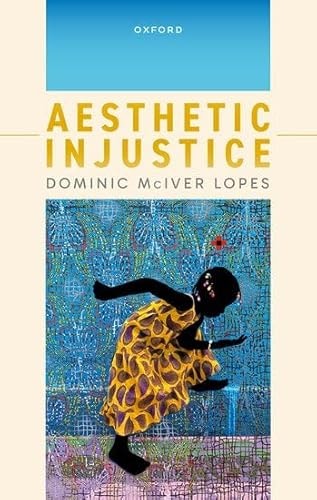
Aesthetic Injustice
0
0
As an Amazon Associate and affiliate partner, Menrva Books earns from qualifying purchases. Learn more
Author Description
A Just Society Is Well Ordered. Put Another Way, Justice Is Goodness In Relatively Large Scale Social Arrangements. Put In Terms Of Reasons Rather Than Goodness, Those Relatively Large Scale Social Arrangements Are Just That We Have Reason To Implement. Correspondingly, Injustice Is Badness In Relatively Large Scale Social Arrangements: They Are Ones That We Have Reason Not To Put In Place. So Articulated, Concepts Of Justice And Injustice Are Ancient And Widespread, But Some Concepts Of Some Specific Varieties Of Injustice Have Taken Hold Only Recently And Only In Some Societies. After All, Unjust Social Arrangements Tend To Persist When They Make It Hard For People To Conceptualize What Makes Them Unjust. For Example, The Concept Of Racial Injustice Is A Product Of A Long And Arduous Struggle, Part Of Which Was A Struggle To Overcome Thinking That Obscured The Injustice Of Racism. The Reality Of Racial Injustice Antedates Our Capacity To See It, With Full Clarity, For The Injustice That It Is. We Should Expect That We Will Continue To Expand The Repertoire Of Concepts By Means Of Which We Bring Existing Injustices Into View, And We Should Hope For The Expansion To Continue Until No Stone Is Left Unturned. What Is About To Be Dubbed Aesthetic Injustice Has Not Been Fully Recognized. In Order To Bring It Into View, This Book Introduces And Then Defends A Theory Of Aesthetic Injustice.
Menrva's Summary
THE THESIS
This book investigates the concept of aesthetic injustice, arguing that certain social arrangements are unjust because they systematically impede our ability to appreciate or engage with aesthetic value. Dominic McIver Lopes, a prominent philosopher of art, utilizes a framework of normative social theory to demonstrate how aesthetic practices can be structured in ways that mirror other forms of systemic inequality. By drawing on the history of conceptualizing injustice, he posits that we must expand our philosophical repertoire to identify and rectify these previously overlooked harms.
THE SCOPE MAP
What You Will Find
- A formal definition and theoretical defense of aesthetic injustice as a distinct social harm.
- An analysis of how social structures influence the capacity for aesthetic judgment and appreciation.
- A philosophical methodology that connects aesthetic value to broader questions of social justice and human rights.
- Case studies and conceptual frameworks that illustrate how aesthetic exclusion functions within contemporary society.
THE AUTHORITY PERSPECTIVE
Experts in the field of aesthetics and political philosophy recognize this work as a significant contribution to the expansion of social justice discourse into the realm of art and culture. Readers frequently note the academic density of the prose, which requires a strong background in philosophical argumentation to fully grasp the author's nuanced claims.
Page Count:
208
Publication Date:
2025-01-24
Publisher:
Oxford University Press
ISBN-10:
0198930984
ISBN-13:
9780198930983
Philosophy
Politics
Aesthetics
Social justice
Ethics
Political Philosophy
Community Tags
Similar Books