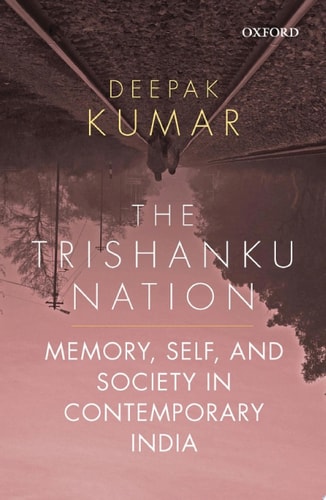
The Trishanku Nation: Memory, Self, and Society in Contemporary India
0
0
As an Amazon Associate and affiliate partner, Menrva Books earns from qualifying purchases. Learn more
Author Description
Taking A Cue From The Story Of Trishanku—the Mythological King Who Aspired To Reach Heaven While Still Alive—deepak Kumar Builds A Compelling Narrative On The State Of Contemporary India. Much Like Trishanku, Who Only Succeeded In Being Stuck In Limbo Between Heaven And Earth, India Appears To Be Oscillating At The Crossroads Of Modernity And Tradition; Development And Corruption; And Diversity And Communalism. The Trishanku Nation Presents A Provocative Account Of A Country Marked By Its Contradictions And Seamlessly Combines Everyday Social History With Academic Insights. All Through Its Civilizational Progress India Has Defied Simple Categorizations. This Suppleness Has Been Its Greatest Strength And, To A Large Extent, Also Responsible For Its Myriad Problems. This Volume Dwells On This Predicament Of Post-independence India. Based On Memory, Both Historical And Personal, It Begins With The Depiction Of Life In A Moffusil Town And Moves On To Examine Closely Issues Of Caste, Religion, Communalism, Governance, Corruption, Education, Science, Culture, And So Forth, As Seen In The Last Five Decades. Presented With Rare Verve And Wit, And By Using The Lens Of Personal Experiences, These ‘rumblings’ Help Unfurl Layers Of Life In The Indian Subcontinent.
Menrva's Summary
THE THESIS
This book investigates the core question of how India navigates the persistent tension between its traditional roots and modern aspirations, effectively existing in a state of perpetual transition. Deepak Kumar, drawing upon his background in social history and personal experience, constructs a framework that uses the mythological figure of Trishanku as a metaphor for a nation caught between competing ideologies. He synthesizes historical analysis with personal memory to examine the structural contradictions that have defined the Indian subcontinent over the last five decades.
THE SCOPE MAP
What You Will Find
- A socio-historical analysis of post-independence India spanning five decades.
- A thematic exploration of caste, religion, communalism, and governance.
- A methodological approach that blends personal memoir with academic inquiry.
- Critical examination of systemic issues including corruption, education, and scientific development.
THE AUTHORITY PERSPECTIVE
Critics and readers frequently note the accessible yet insightful nature of the prose, which balances scholarly rigor with a personal, narrative voice. Experts highlight this work as a valuable contribution to the study of contemporary Indian society, particularly for its ability to synthesize complex cultural contradictions into a coherent, readable format.
Page Count:
240
Publication Date:
2015-01-01
Publisher:
OUP India
ISBN-10:
0199089531
ISBN-13:
9780199089536
Non-Fiction
History
Politics
Categories
India
Kindle eBooks
World politics
Kindle Store
Asia
Sociology
Community Tags
Similar Books