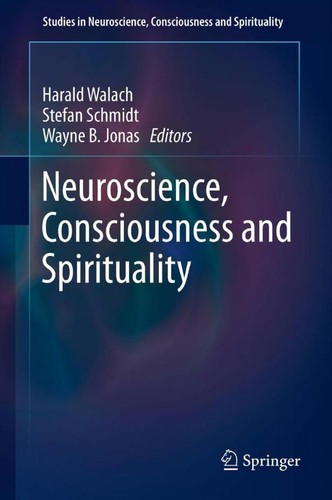
Neuroscience, Consciousness and Spirituality
0
0
As an Amazon Associate and affiliate partner, Menrva Books earns from qualifying purchases. Learn more
Author Description
Neuroscience, Consciousness and Spirituality presents a variety of perspectives by leading thinkers on contemporary research into the brain, the mind and the spirit. This volumes aims at combining knowledge from neuroscience with approaches from the experiential perspective of the first person singular in order to arrive at an integrated understanding of consciousness. Individual chapters discuss new areas of research, such as near death studies and neuroscience research into spiritual experiences, and report on significant new theoretical advances. From Harald Walach's introductory essay, "Neuroscience, Consciousness, Spirituality--Questions, Problems and Potential Solutions," to the concluding chapter by Robert K. C. Foreman entitled "An Emerging New Model for Consciousness: The Consciousness Field Model," this book represents a milestone in the progress towards an integrated understanding of spirituality, neuroscience and consciousness. It is the first in a series of books that are dedicated to this topic.--Publisher's website.
Menrva's Summary
THE THESIS
This volume seeks to bridge the gap between empirical neuroscience and the subjective, first-person experience of consciousness and spirituality. It brings together leading thinkers to explore contemporary research on the brain, mind, and spirit, aiming for an integrated understanding of consciousness. Chapters investigate novel research areas like near-death studies and the neuroscience of spiritual experiences, alongside significant theoretical advancements. The book is positioned as a foundational text for understanding the intersection of spirituality, neuroscience, and consciousness.
THE SCOPE MAP
- Exploration of new research areas in consciousness studies.
- Integration of neuroscience with first-person experiential perspectives.
- Discussion of near-death studies and their neurological correlates.
- Neuroscience research into spiritual experiences.
- Presentation of significant new theoretical advances in consciousness models.
- Introductory essay by Harald Walach: "Neuroscience, Consciousness, Spirituality--Questions, Problems and Potential Solutions."
- Concluding chapter on "An Emerging New Model for Consciousness: The Consciousness Field Model" by Robert K. C. Foreman.
THE AUTHORITY PERSPECTIVE
This collection is presented as a milestone in the progress toward an integrated understanding of spirituality, neuroscience, and consciousness, being the first in a dedicated series. The compilation of diverse perspectives from leading thinkers suggests a comprehensive overview of the field. The inclusion of both empirical research and theoretical models indicates an aim to provide a robust framework for future study. Its positioning as a foundational text implies it is intended for academics and researchers interested in interdisciplinary approaches to consciousness.
Page Count:
298
Publication Date:
2011-01-01
ISBN-10:
9400720785
ISBN-13:
9789400720787
Science
Religion
Psychology
Non-Fiction
Spirituality
Philosophy
Neuroscience
Consciousness Studies
Community Tags
Similar Books