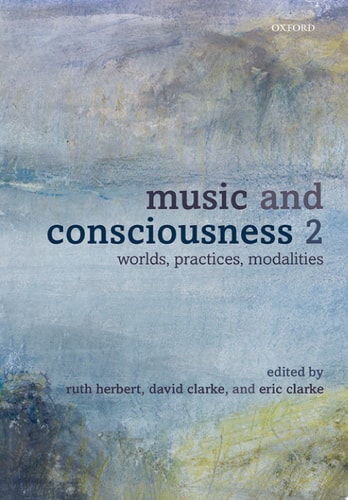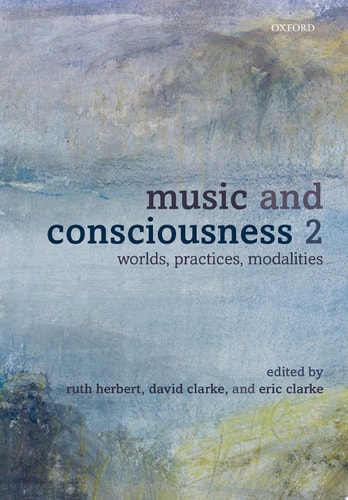
Music and Consciousness 2: Worlds, Practices, Modalities
0
0
As an Amazon Associate and affiliate partner, Menrva Books earns from qualifying purchases. Learn more
Author Description
Consciousness has been described as one of the most mysterious things in the universe. Scientists, philosophers, and commentators from a whole range of disciplines can't seem to agree on what it is, generating a sizeable field of contemporary research known as consciousness studies. Following its forebear Music and Consciousness: Philosophical, Psychological and Cultural Perspectives (OUP, 2011), this volume argues that music can provide a valuable route to understanding consciousness, and also that consciousness opens up new perspectives for the study of music. It argues that consciousness extends beyond the brain, and is fundamentally related to selves engaged in the world, culture, and society. The book brings together an interdisciplinary line up of authors covering topics as wide ranging as cognitive psychology, neuroscience, psychoanalysis, philosophy and phenomenology, aesthetics, sociology, ethnography, and performance studies and musical styles from classic to rock, trance to Daoism, jazz to tabla, and deep listening to free improvisation. Music and Consciousness 2 will be fasinating reading for those studying or working in the field of musicology, those researching consciousness as well as cultural theorists, psychologists, and philosophers.
Menrva's Summary
THE THESIS
This volume investigates the reciprocal relationship between music and consciousness, proposing that music serves as a critical lens for understanding subjective experience while consciousness provides a framework for analyzing musical engagement. The editors, David B. Clarke, Eric F. Clarke, and Ruth Herbert, curate an interdisciplinary collection of essays that challenge the neurocentric view of consciousness. They argue that consciousness is an embodied, situated phenomenon that extends beyond the brain into the social, cultural, and physical worlds of the individual.
THE SCOPE MAP
What You Will Find
- Theoretical frameworks bridging phenomenology, psychoanalysis, and cognitive science
- Analysis of diverse musical practices ranging from classical and jazz to trance and free improvisation
- Explorations of the intersection between musical performance and cultural identity
Scope Limits
- The text does not provide a singular, unified theory of consciousness but rather a collection of diverse disciplinary perspectives
- It does not focus on technical music theory or composition pedagogy
THE AUTHORITY PERSPECTIVE
Experts recognize this volume as a significant contribution to the interdisciplinary field of musicology and consciousness studies. Readers frequently note the academic density of the prose, which requires a foundational understanding of philosophy or cognitive science to fully synthesize the arguments presented.
Page Count:
351
Publication Date:
2019-01-01
Publisher:
OUP Oxford
ISBN-10:
0192526510
ISBN-13:
9780192526519
Philosophy
Humanities
Music
Mind & Body
Musicology
Consciousness Studies
Neuroscience
Consciousness
Performance Studies
Cultural Theory
Cognitive Psychology
Community Tags
Similar Books