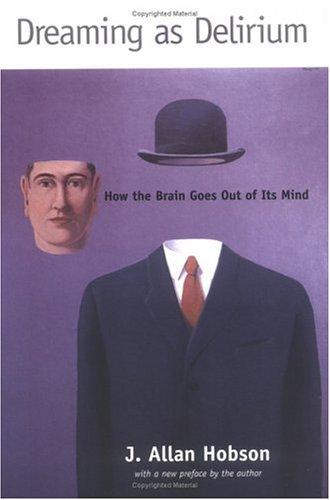
Dreaming as Delirium
0
0
As an Amazon Associate and affiliate partner, Menrva Books earns from qualifying purchases. Learn more
Author Description
In this book J. Allan Hobson sets out a compelling - and controversial - theory of consciousness. Our brain-mind, as he calls it, is not a fixed identity but a dynamic balancing act between the chemical systems that regulate waking and dreaming. Drawing on his work both as a sleep researcher and as a psychiatrist, Hobson looks in particular at the strikingly similar chemical characteristics of the states of dreaming and psychosis. His underlying theme is that the form of our thoughts, emotions, dreams, and memories derives from specific nerve cells and electrochemical impulses described by neuroscientists. Among the questions Hobson explores are, what are dreams? Do they have any hidden meaning, or are they simply emotionally salient images whose peculiar narrative structure reflects the unique neurophysiology of sleep? And what is the relationship between the delirium of our dream life and psychosis?--BOOK JACKET.
Menrva's Summary
THE THESIS
The book posits that consciousness is a dynamic balancing act between the chemical systems regulating waking and dreaming states. Drawing on his dual expertise as a sleep researcher and psychiatrist, J. Allan Hobson explores the chemical similarities between dreaming and psychosis. He argues that the structure of our thoughts, emotions, dreams, and memories originates from specific nerve cells and electrochemical impulses. The work investigates the nature of dreams, questioning whether they hold hidden meanings or are merely emotionally salient images shaped by sleep's unique neurophysiology, and examines the link between dream delirium and psychosis.
THE SCOPE MAP
- Exploration of the brain-mind as a dynamic balancing act between waking and dreaming chemical systems.
- Analysis of the chemical characteristics shared by dreaming and psychosis.
- Discussion of how nerve cells and electrochemical impulses shape thoughts, emotions, dreams, and memories.
- Investigation into the definition and potential meaning of dreams.
- Examination of the narrative structure of dreams as a reflection of sleep neurophysiology.
- Exploration of the relationship between dream delirium and psychosis.
THE AUTHORITY PERSPECTIVE
The book presents a compelling and controversial theory of consciousness, drawing significant attention for its exploration of the parallels between dreaming and psychosis. Hobson's work is noted for its integration of sleep research and psychiatric perspectives to redefine the brain-mind. The underlying theme that thought and emotion derive from specific neurobiological processes offers a framework for understanding subjective experience. The book challenges conventional views on the meaning and function of dreams, positioning them within a neurochemical context.
Page Count:
300
Publication Date:
1999-01-01
ISBN-10:
0262581795
Science
Non-Fiction
Psychology
Neuroscience
Consciousness Studies
Community Tags
Similar Books