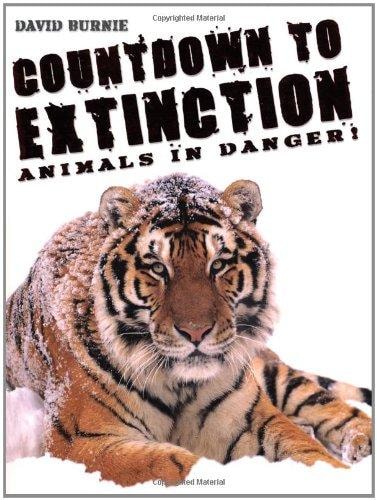
Countdown to Extinction: Animals in Danger!
0
0
As an Amazon Associate and affiliate partner, Menrva Books earns from qualifying purchases. Learn more
Author Description
Today, there are over 6.5 billion people in the world. Together, we take up more space, eat more food and create more waste than any other form of life. Human dominance may be good news for us, but it's bad news for many other animals that share the planet with us. David Burnie looks at extinction from the mass wipe-out of the dinosaurs, 65 million years ago, to the probable extinction of the tiger within the next ten years. He covers many species from the cuddly and much-loved panda to the less attractive thylacine, classed as vermin but no less valuable to the ecological balance of the planet. All sorts of animals are represented, from the feathered and winged to the slimy and scaly.
Menrva's Summary
THE THESIS
This book investigates the accelerating rate of animal extinction caused by human expansion and the resulting impact on global ecological stability. David Burnie, an experienced naturalist and author, utilizes historical data and current biological trends to argue that human dominance is fundamentally altering the survival prospects of diverse species. The text provides a framework for understanding the transition from prehistoric mass extinction events to the modern anthropogenic crisis facing wildlife today.
THE SCOPE MAP
What You Will Find
- Historical analysis of mass extinction events including the Cretaceous-Paleogene wipe-out
- Comparative study of diverse animal classes ranging from mammals to reptiles and birds
- Examination of the ecological value of species often labeled as vermin
- Projections regarding the survival timelines of endangered species like the tiger
THE AUTHORITY PERSPECTIVE
Experts recognize this work as an accessible entry point for understanding the mechanics of biodiversity loss. Readers frequently note the clarity of the author's prose in connecting human population growth to the decline of specific animal populations.
Page Count:
0
Publication Date:
2008-01-01
Publisher:
Oxford University Press
ISBN-10:
0199116008
ISBN-13:
9780199116003
Nature
Science
Animals
Ecology
Subjects
Conservation
Environment
Community Tags
Similar Books