Moon
0
0
As an Amazon Associate and affiliate partner, Menrva Books earns from qualifying purchases. Learn more
Author Description
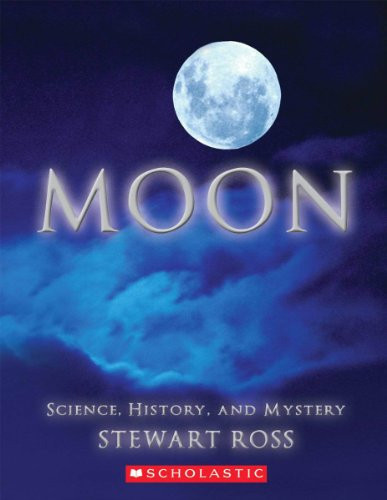
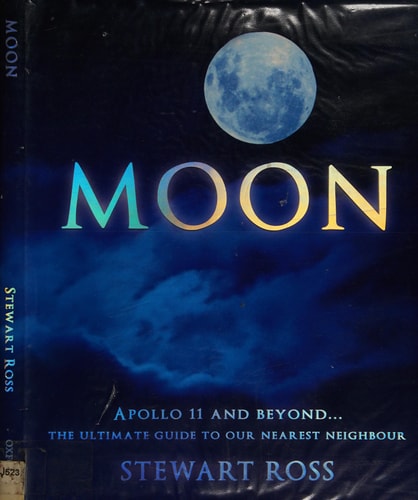
Product Description The Moon is the only natural satellite of the Earth. It is the second brightest object in the sky after the Sun. Since prehistoric times, the Moon has been an object of fascination, awe and even worship for many peoples worldwide.Called Luna by the Romans, Selene and Artemis by the Greeks, and many other names in other mythologies, it has always been a romantic icon; even after man had walked on the moon it retained its romantic appeal.The fortieth anniversary of the Moon landings is an opportunity to look at the Moon from many angles; historically, as an object of worship; traditionally, as one of the first objects for scientific research in the solar system; artistically, the Moon features in paintings (Rousseau, Chagall etc)books (Moonfleet, the Moonspinners, The Moon's a Balloon etc) films (Moonstruck, Moonraker, Moonlighting etc) endless music (from Moonlight sonata and Clair de Lune to Bad Moon Rising and Moon River); and finally scientifically, an exploration of the historic journey to the Moon and back in1969. About the Author Stewart Ross has taught in a variety of institutions throughout the world. With over a 175 books to his credit, he is one of Britain's most popular and versatile authors. His books for children have won several prizes and have been translated into more than a dozen languages.
Menrva's Summary
THE THESIS
This book investigates the multifaceted role of the Moon as both a celestial body and a persistent cultural symbol throughout human history. Author Stewart Ross, a prolific writer with extensive experience in educational publishing, synthesizes historical, scientific, and artistic perspectives to examine how the lunar satellite has influenced human development and creative expression. The text provides a comprehensive overview of the Moon's significance, ranging from ancient mythological worship to the technical achievements of the 1969 lunar landings.
THE SCOPE MAP
What You Will Find
- Historical analysis of lunar worship across diverse global mythologies and ancient civilizations.
- Scientific overview of the Moon as a natural satellite and its role in early solar system research.
- Examination of the Moon's representation in fine art, literature, film, and music.
- Detailed account of the historic 1969 lunar landing and the subsequent scientific exploration of the lunar surface.
THE AUTHORITY PERSPECTIVE
Experts and educators recognize this work as a versatile introductory text that effectively bridges the gap between scientific fact and cultural history. Readers frequently note the accessible prose style, which makes complex historical and astronomical themes suitable for a broad, general audience.
Page Count:
128
Publication Date:
2009-05-01
Publisher:
Oxford University Press
ISBN-10:
0199116911
ISBN-13:
9780199116911
Science
History
Art History
Astronomy
Mythology
SCIENCE Astronomy