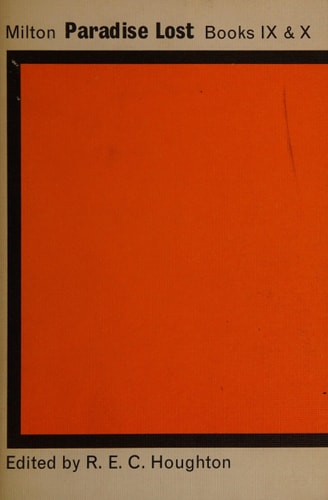
Paradise Lost: Books IX and X
0
0
As an Amazon Associate and affiliate partner, Menrva Books earns from qualifying purchases. Learn more
Author Description
Milton's Paradise Lost is one of the greatest epic poems in the English language. It tells the story of the Fall of Man, a tale of immense drama and excitement, of rebellion and treachery, of innocence pitted against corruption, in which God and Satan fight a bitter battle for control of mankind's destiny. The struggle rages across three worlds - heaven, hell, and earth - as Satan and his band of rebel angels plot their revenge against God. At the center of the conflict are Adam and Eve, motivated by all too human temptations, but whose ultimate downfall is unyielding love.Marked by Milton's characteristic erudition is a work epic both in scale and, notoriously, in ambition. For nearly 350 years it has held generation upon generation of scholars, students and readers in rapt attention and its profound influence can be seen in almost every corner of Western culture.
Menrva's Summary
THE PULSE
The central conflict involves the temptation of Adam and Eve by Satan, leading to the irreversible Fall of Man. The narrative follows the protagonist figures of Adam and Eve as they navigate the Garden of Eden, while the antagonist, Satan, utilizes deception to undermine their obedience to the Creator. The world is defined by the theological constraints of seventeenth-century Christian cosmology, where the physical realm of Earth is inextricably linked to the spiritual realms of Heaven and Hell. The poem employs a formal, elevated blank verse structure to articulate the moral and existential stakes of the characters' choices.
INSIDE THE PAGES
- Use of blank verse as the primary poetic structure
- Extensive employment of epic similes to expand the scale of the narrative
- Focus on the psychological interiority of Satan during his soliloquies
- Detailed depiction of the Garden of Eden as a locus of innocence
- Exploration of free will versus divine predestination
- Incorporation of classical allusions to enrich the theological framework
- Dramatic tension centered on the dialogue between the tempter and the tempted
- Thematic examination of the consequences of disobedience
THE COLLECTIVE ECHO
Discussion often centers on the complex characterization of Satan, whom many readers view as a compelling, if tragic, figure of rebellion. Critics frequently highlight the linguistic density and the rhythmic precision of the verse, which demands careful attention from the reader. The work is widely analyzed for its profound influence on Western literature and its intricate theological arguments regarding human agency. Readers often note that the poem remains a foundational text for understanding the development of the English epic tradition.
Page Count:
200
Publication Date:
1970-03-15
Publisher:
Oxford University Press
ISBN-10:
0199110018
ISBN-13:
9780199110018
Philosophy
Literature
Religious
Epic Poetry
classic