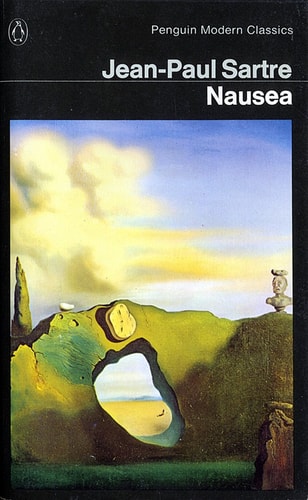
Nausea
0
0
As an Amazon Associate and affiliate partner, Menrva Books earns from qualifying purchases. Learn more
Author Description
Nausea is the story of Antoine Roquentin, a French writer who is horrified at his own existence. In impressionistic, diary form he ruthlessly catalogues his every feeling and sensation about the world and people around him. His thoughts culminate in a pervasive, overpowering feeling of nausea which "spread at the bottom of the viscous puddle, at the bottom of our time, the time of purple suspenders and broken chair seats; it is made of wide, soft instants, spreading at the edge, like an oil stain." Roquentin's efforts to try and come to terms with his life, his philosophical and psychological struggles, give Sartre the opportunity to dramatize the tenets of his Existentialist creed.
Menrva's Summary
THE PULSE
Antoine Roquentin, a solitary writer living in a French port town, experiences a profound and unsettling realization regarding the nature of his own existence. Roquentin documents his daily observations and internal shifts through a series of diary entries, attempting to articulate the source of his growing alienation from the physical world. He faces the challenge of reconciling his consciousness with the brute, meaningless reality of objects and other people. The narrative framework remains strictly first-person, forcing the reader to inhabit the protagonist's claustrophobic mental state as he confronts the absurdity of being.
INSIDE THE PAGES
- Epistolary narrative structure presented as a personal diary
- Detailed phenomenological descriptions of mundane objects
- Exploration of the existential concept of contingency
- Focus on the protagonist's isolation within a bourgeois social setting
- Philosophical inquiry into the nature of freedom and responsibility
- Use of sensory imagery to convey psychological distress
- Minimalist plot progression favoring internal monologue
- Examination of the tension between historical research and lived experience
THE COLLECTIVE ECHO
Readers and critics frequently identify this work as a foundational text for understanding twentieth-century existentialist thought. Discussion often centers on the effectiveness of the diary format in mirroring the protagonist's descent into psychological discomfort. Many observers highlight the clinical precision of the prose, which transforms ordinary settings into sites of profound philosophical inquiry. The text is noted for its ability to sustain an atmosphere of intellectual intensity without relying on traditional dramatic action. Scholars often emphasize how the narrative serves as a vehicle for exploring the fundamental disconnect between human consciousness and the material world.
Page Count:
256
Publication Date:
1970-01-01
Publisher:
Penguin Books Ltd
ISBN-10:
0140022767
ISBN-13:
9780140022766
Philosophy
Politics
Psychological
Classics
British & Irish
classic
French literature
Movements
Existentialism
Community Tags
Other Editions(8)





Similar Books






Reader Comments
Share Your Thoughts
No comments yet. Be the first to share your thoughts!