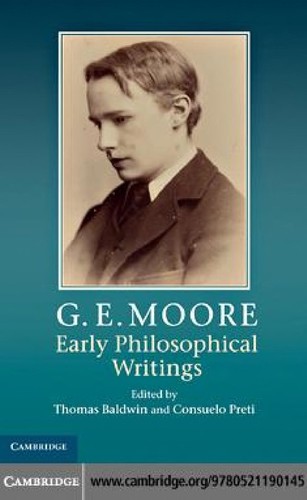
G. E. Moore
0
0
As an Amazon Associate and affiliate partner, Menrva Books earns from qualifying purchases. Learn more
Author Description
G. E. Moore's fame as a philosopher rests on his ethics of love and beauty, which inspired Bloomsbury, and on his 'common sense' certainties, which challenge abstract philosophical theory. Behind these themes lie his critical engagement with Kant's idealist philosophy, which is published here for the first time. These early writings, Moore's fellowship dissertations of 1897 and 1898, show how he initiated his influential break with idealism. In 1897 his main target was Kant's ethics; but by 1898 it was the whole Kantian project of transcendental philosophy that he rejected, and the theory which he developed to replace it gave rise to the new project of philosophy as logical analysis. This edition includes comments by Moore's examiners, Henry Sidgwick, Edward Caird and Bernard Bosanquet, and in a substantial introduction the editors explore the crucial importance of the dissertations to the history of twentieth-century philosophical thought
Menrva's Summary
THE THESIS
This book examines the foundational philosophical contributions of G. E. Moore, focusing on his early critical engagement with Kantian idealism and his development of 'common sense' philosophy. The work delves into Moore's ethical theories concerning love and beauty, which significantly influenced the Bloomsbury Group, and his certainty-based epistemology that challenged abstract philosophical thought. It presents for the first time Moore's fellowship dissertations from 1897 and 1898, demonstrating his pivotal break from idealism and the genesis of his project in logical analysis. The edition also includes commentary from his examiners and an introduction exploring the dissertations' impact on 20th-century philosophy.
THE SCOPE MAP
- Moore's early critical engagement with Kant's idealist philosophy.
- Analysis of Moore's ethics of love and beauty.
- Exploration of Moore's 'common sense' certainties.
- Presentation of Moore's fellowship dissertations of 1897 and 1898.
- Inclusion of comments by examiners Henry Sidgwick, Edward Caird, and Bernard Bosanquet.
- An introduction detailing the dissertations' importance to 20th-century philosophical thought.
THE AUTHORITY PERSPECTIVE
This collection is regarded as a significant scholarly contribution, offering crucial early writings of G. E. Moore that illuminate his influential break from idealism and the origins of philosophical analysis. The inclusion of his dissertations and examiner comments provides direct insight into his formative intellectual development. The editors' introduction contextualizes these works, highlighting their pivotal role in shaping 20th-century philosophical discourse. The material suggests a text of considerable academic density, aimed at specialists and students of philosophy.
Page Count:
338
Publication Date:
2011-01-01
ISBN-10:
0521190142
ISBN-13:
9780521190145
History
Non-Fiction
Philosophy
Ethics
Epistemology
Community Tags
Similar Books