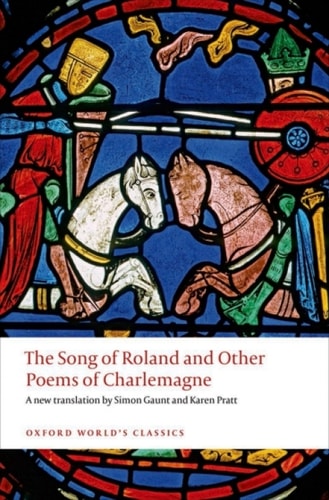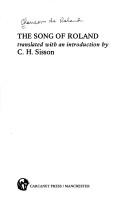
The Song of Roland
0
0
As an Amazon Associate and affiliate partner, Menrva Books earns from qualifying purchases. Learn more
Author Description
The Song of Roland is an epic poem, likely composed in the 11th century, that recounts the last battle of the Frankish knight Roland at Roncevaux Pass in the Pyrenees. It is a foundational work of French literature and a prime example of the chanson de geste, or song of deeds. The poem details Roland's heroic stand against a vastly superior Saracen army, his refusal to blow his olifant (horn) to summon Charlemagne's main army until it is too late, and his eventual death, followed by Charlemagne's vengeance.
Menrva's Summary
THE PULSE
A valiant knight faces betrayal and a desperate last stand against overwhelming Saracen forces. Roland, nephew to Charlemagne, finds himself in a perilous situation during the Battle of Roncevaux Pass. Driven by pride and a sense of honor, Roland's objective is to defend Christendom and uphold his reputation, but he is betrayed by his stepfather, Ganelon, who conspires with the enemy. The physical constraints of the Pyrenean landscape and the overwhelming numbers of the Saracen army oppose Roland and his rearguard. The narrative unfolds as an epic poem, recounting the tragic events and the heroic, albeit doomed, defense.
INSIDE THE PAGES
- Recounts the legendary Battle of Roncevaux Pass.
- Features the heroic figure of Roland, a paladin of Charlemagne.
- Explores themes of honor, betrayal, and martyrdom.
- Depicts the conflict between Christian Franks and Saracen invaders.
- Includes divine intervention and supernatural elements.
- Details Roland's fateful decision to blow his olifant (horn).
- Presents a stark contrast between Roland's valor and Ganelon's treachery.
- Culminates in the deaths of Roland and his companions, followed by Charlemagne's vengeance.
THE COLLECTIVE ECHO
The Song of Roland is a foundational work of medieval literature, celebrated for its vivid depiction of chivalric ideals and its dramatic narrative. Its enduring appeal lies in the tragic heroism of its protagonist and the stark portrayal of loyalty and betrayal. The poem has been studied for centuries for its historical insights into the Carolingian era and its influence on later epic traditions. While its literary merits are widely acknowledged, its archaic language and epic scope can present a challenge to modern readers, yet its core themes of courage and sacrifice continue to resonate.
Page Count:
135
Publication Date:
1984-01-01
ISBN-10:
085635421X
ISBN-13:
9780856354212
Fiction
Poetry
Romance
Classics
Epic Poetry
French literature
Medieval
Community Tags
Similar Books