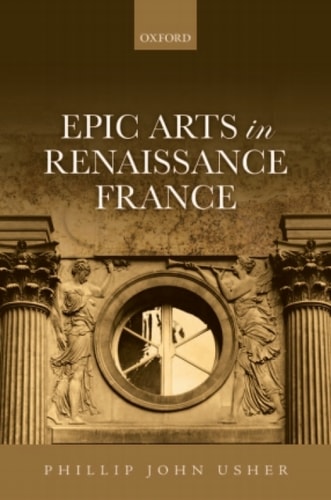
Epic Arts in Renaissance France
0
0
As an Amazon Associate and affiliate partner, Menrva Books earns from qualifying purchases. Learn more
Author Description
Epic Arts in Renaissance France studies the relationship between epic literature and other art forms such as painting, sculpture, and architecture. Why, the book asks, the epic heroes and themes so ubiquitous in French Renaissance art are widely celebrated whereas the same period's literary epics, frequently maligned, now go unread? To explore this paradox, the book investigates a number of epic building sites, i.e. specific situations in which literary epics either become the basis for realisations in other art forms or somehow contest or compete with them. Beginning with a detour about the appearance of epic heroes (Odysseus and Aeneas) on marriage chests in fifteenth-century Florence, the study traces how French communities of readers, writers, translators, and artists reinvent epic forms in their own--or their patron's--image. Following extended discussion of three galleries in different regions of France, which all depicted key scenes from the classical epics of Homer, Virgil, and Lucan, the book turns to epics written in the period. Chapters of Epic Arts focus on Etienne Dolet's Fata, which praise the victories (but also failures) of François Ier in ways that make it both a continuum of Fontainebleau and a response to the celebration of French defeat in foreign paintings; on Ronsard's Franciade, whose muse was depicted on the façade of the Louvre and whose story was eventually taken up in a long series of paintings by Toussaint Dubreuil; and on Agrippa d'Aubigné's Protestant Tragiques, which allude to, and frequently function as graffiti over, Catholic works of art in Paris and Rome. Situated at the frontier of literary criticism and art history, Epic Arts in Renaissance France is a compelling call for a revaluation of French epic literature and indeed of how we read.
Menrva's Summary
THE THESIS
This book investigates the paradox of why epic themes and heroes remained ubiquitous in French Renaissance visual arts while the literary epics of the same period suffered from neglect and critical disdain. Phillip John Usher, a scholar of early modern French literature, utilizes a comparative methodology to bridge the gap between textual analysis and art history. By examining specific sites where literature and visual media intersect, he argues for a revaluation of French epic poetry as a dynamic, responsive force within the broader cultural landscape of the Renaissance.
THE SCOPE MAP
What You Will Find
- Comparative analysis of epic motifs in painting, sculpture, and architecture.
- Case studies of specific French galleries and building sites featuring Homeric and Virgilian themes.
- Critical readings of works by Etienne Dolet, Pierre de Ronsard, and Agrippa d'Aubigné.
- Examination of the interplay between political patronage and artistic representation.
Scope Limits
- The study does not provide an exhaustive history of all French Renaissance literature.
- It focuses primarily on the intersection of epic poetry and visual arts rather than general aesthetic theory.
THE AUTHORITY PERSPECTIVE
Scholars in the field identify this work as a significant contribution to the interdisciplinary study of early modern French culture. Readers frequently note the academic density of the prose and the author's ability to synthesize complex art historical data with literary critique.
Page Count:
272
Publication Date:
2013-01-01
Publisher:
OUP Oxford
ISBN-10:
0191511668
ISBN-13:
9780191511660
English & College Success
French literature
Art History
Epic Poetry
English
Cultural History
Literary Criticism
Community Tags
Other Editions(3)


Similar Books







Reader Comments
Share Your Thoughts
No comments yet. Be the first to share your thoughts!