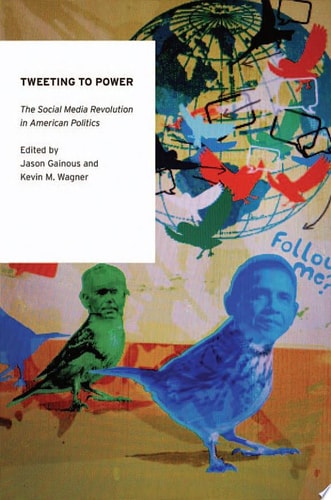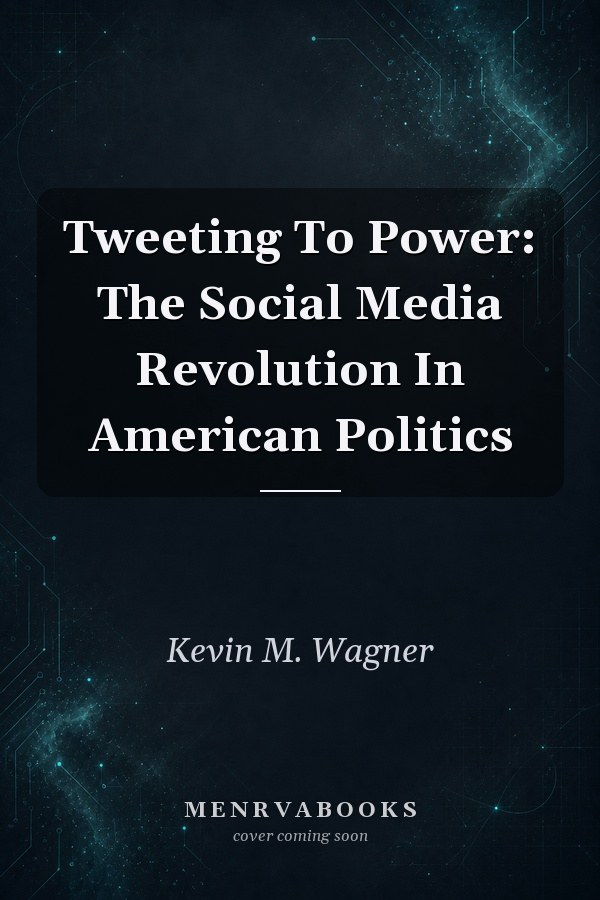
Tweeting To Power: The Social Media Revolution In American Politics
0
0
As an Amazon Associate and affiliate partner, Menrva Books earns from qualifying purchases. Learn more
Author Description
Online social media are changing the face of politics in the United States. Beginning with a strong theoretical foundation grounded in political, communications and psychology literature, Tweeting to Power examines the effect of online social media on how people come to learn, understand and engage in politics. Gainous and Wagner propose that platforms such as Facebook and Twitter offer the opportunity for a new information flow that is no longer being structured and limited by the popular media. Television and newspapers, which were traditionally the sole or primary gatekeeper, can no longer limit or govern what information is exchanged. By lowering the cost of both supplying the information and obtaining it, social networking applications have recreated how, when and where people are informed. To establish this premise, Gainous and Wagner analyze multiple datasets, quantitative and qualitative, exploring and measuring the use of social media by voters and citizens as well as the strategies and approaches adopted by politicians and elected officials. They illustrate how these new and growing online communities are new forums for the exchange of information that is governed by relationships formed and maintained outside traditional media. Using empirical measures, they prove both how candidates utilize Twitter to shape the information voters rely upon and how effective this effort was at garnering votes in the 2010 congressional elections. With both theory and data, Gainous and Wagner show how the social media revolution is creating a new paradigm for political communication and shifting the very foundation of the political process.
Menrva's Summary
THE THESIS
This book investigates the transformative impact of online social media on American political communication and engagement. The authors, drawing on political science, communications, and psychology literature, propose that platforms like Twitter and Facebook have fundamentally altered how citizens receive and understand political information, moving beyond the traditional gatekeeping role of mainstream media. They analyze quantitative and qualitative datasets to demonstrate how politicians leverage social media to shape voter perceptions and how these online communities facilitate information exchange governed by non-traditional relationships, ultimately creating a new paradigm for political discourse and processes, as evidenced by the 2010 congressional elections.
THE SCOPE MAP
- Theoretical foundations from political science, communications, and psychology literature.
- Analysis of how online social media affects political learning, understanding, and engagement.
- Examination of platforms such as Facebook and Twitter as new information flows.
- Data-driven exploration of voter and citizen use of social media.
- Strategies and approaches adopted by politicians and elected officials in the digital space.
- Empirical measures of how candidates use Twitter to influence voter information and garner votes.
- Evidence of a new paradigm in political communication and the shifting foundations of the political process.
THE AUTHORITY PERSPECTIVE
The book is presented as a rigorous academic analysis, grounded in extensive data and established theories from multiple disciplines. It aims to demonstrate empirically how social media has reshaped political landscapes, offering a new framework for understanding contemporary political communication. The authors' approach combines theoretical depth with empirical evidence, suggesting a comprehensive study for those interested in the intersection of technology and politics. The work posits a significant shift in how political information is disseminated and consumed, marking a new era in democratic engagement.
Page Count:
208
Publication Date:
2014-01-01
ISBN-10:
0199965099
ISBN-13:
9780199965090
Science & Technology
Non-Fiction
Politics
Art
American Politics
Social Media
Communication
Community Tags
Similar Books