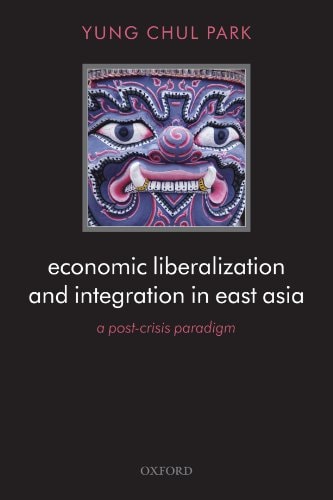
Economic Liberalization and Integration in East Asia: A Post-Crisis Paradigm
0
0
As an Amazon Associate and affiliate partner, Menrva Books earns from qualifying purchases. Learn more
Author Description
Several years before the 1997-98 Asian financial crisis, most East Asian economies with the exception of China had engaged in the liberal reform prescriptions of the Washington Consensus. The Asian financial crisis added impetus to the transformation process as the crisis countries accepted the Washington Consensus as part of their commitment to the IMF policy conditionality.In this book the author argues for the continuing validity of an 'East Asian' model of economic development that differs distinctly from the Washington Consensus. He argues that, while this model was undermined to some extent by the 1997-98 financial crisis, it remains robust and important in explaining economic events in East Asia. In doing so, he covers the accomplishments and failures of the East Asian development model and the reform agenda for a new East Asian paradigm for post-crisis development.
Menrva's Summary
THE THESIS
This book investigates whether the traditional East Asian model of economic development remains a viable and distinct alternative to the Washington Consensus following the 1997-98 financial crisis. Yung Chul Park, a prominent economist specializing in East Asian financial systems, utilizes historical economic data and policy analysis to evaluate the impact of IMF conditionality on regional development. He argues that despite the disruptions caused by the crisis, the core tenets of the East Asian model retain significant explanatory power for the region's economic trajectory. The text provides a framework for understanding how these economies can integrate global market reforms while maintaining their unique developmental strategies.
THE SCOPE MAP
What You Will Find
- Analysis of the Washington Consensus and its application in East Asian economies.
- Evaluation of the 1997-98 Asian financial crisis and its role in policy transformation.
- Examination of the East Asian development model's historical accomplishments and structural failures.
- Proposals for a new paradigm for post-crisis economic growth and regional integration.
THE AUTHORITY PERSPECTIVE
Experts recognize this work as a significant contribution to the debate surrounding developmental economics in the Pacific Rim. Readers frequently note the academic density of the prose, which is tailored for scholars and policy analysts interested in the intersection of regional history and global financial policy.
Page Count:
304
Publication Date:
2007-07-12
Publisher:
Oxford University Press
ISBN-10:
0199215219
ISBN-13:
9780199215218
Economics
Asia
Finance
Asian Studies
International relations
Industrial Policy
Community Tags
Other Editions(3)


Similar Books