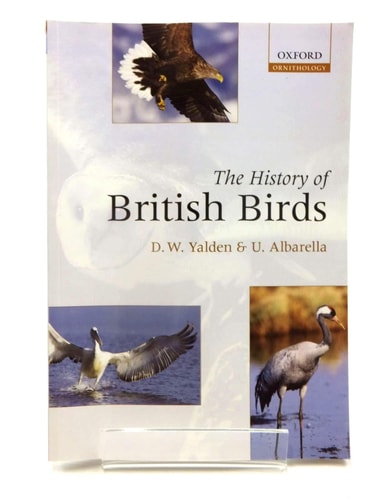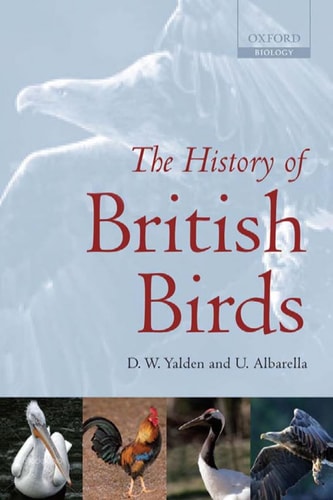
The History of British Birds
0
0
As an Amazon Associate and affiliate partner, Menrva Books earns from qualifying purchases. Learn more
Author Description
The History of British Birds reviews our knowledge of avifaunal history over the last 15,000 years, setting it in its wider historical and European context. The authors, one an ornithologist, the other an archaeologist, integrate a wealth of archaeological data to illuminate and enliven the story, indicating the extent to which climatic, agricultural, and social changes have affected the avifauna. They discuss its present balance, as well as predicting possible future changes.It is a popular misconception that bird bones are rarely preserved (compared with mammals), and cannot be reliably identified when they are found. The book explores both these contentions, armed with a database of 9,000 records of birds that have been identified on archaeolgical sites. Most are in England, but sites elsewhere in Great Britian, Ireland, the Isle of Man and the Channel Isles are included.Britain's most numerous bird is also the most widespread in the archaeological record, but some of the more charismatic species also have a rich historical pedigree. For example, we can say quite a lot about the history of the Crane, Red Kite, White-tailed Eagle and great Auk. The history of many introduced domestic species can also be illuminated. Even so, there remain uncertainties, posed by difficulties of dating or identification, the vagaries of the archaeological record or the ecological specialities of the birds themselves. These issues are highlighted, thus posing research questions for others to answer.And the commonest British bird, then and now? Buy the book and read on...
Menrva's Summary
THE THESIS
This work investigates the historical trajectory of British bird populations over the last 15,000 years, examining how environmental and human factors have shaped current avifaunal diversity. Derek Yalden, an ornithologist, and Umberto Albarella, an archaeologist, synthesize extensive archaeological data to reconstruct the presence and distribution of bird species across the British Isles. By bridging the gap between biological records and human history, the authors provide a framework for understanding how climatic shifts and agricultural development have influenced avian ecology. The text serves as both a comprehensive historical account and a call for further research into the gaps within the archaeological record.
THE SCOPE MAP
What You Will Find
- A comprehensive analysis of 9,000 archaeological records identifying bird remains across Great Britain, Ireland, the Isle of Man, and the Channel Isles.
- Methodological discussions regarding the preservation and identification of avian skeletal remains in archaeological contexts.
- Case studies detailing the historical pedigree of specific species, including the Crane, Red Kite, White-tailed Eagle, and the extinct Great Auk.
- An examination of the impact of human activity, including the introduction of domestic species and land-use changes, on bird populations.
THE AUTHORITY PERSPECTIVE
Experts recognize this volume as a foundational interdisciplinary study that successfully challenges misconceptions regarding the utility of bird bones in archaeological research. Readers frequently note the academic rigor of the data presentation while appreciating the authors' ability to contextualize complex ecological shifts for a broader audience.
Page Count:
288
Publication Date:
2009-01-15
Publisher:
Oxford University Press
ISBN-10:
0199217513
ISBN-13:
9780199217519
History
Nature
Science
Zoology
Ornithology
Archaeology
Birds