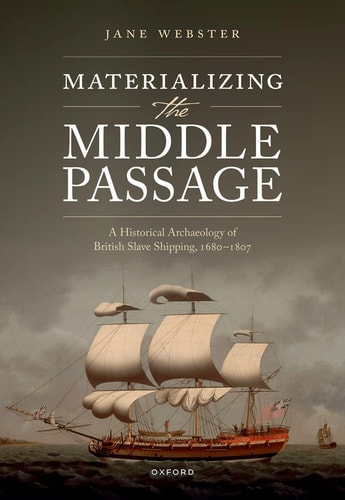
Materializing the Middle Passage: A Historical Archaeology of British Slave Shipping, 1680-1807
0
0
As an Amazon Associate and affiliate partner, Menrva Books earns from qualifying purchases. Learn more
Author Description
An estimated 2.7 million Africans made an enforced crossing of the Atlantic on British slave ships between c.1680 and 1807--a journey that has become known as the 'Middle Passage'. This book focuses on the slave ship itself. The slave ship is the largest artefact of the Transatlantic slave trade, but because so few examples of wrecked slaving vessels have been located at sea, it is rarely studied by archaeologists. Materializing the Middle Passage: A Historical Archaeology of British Slave Shipping,1680-1807 argues that there are other ways for archaeologists to materialize the slave ship. It employs a pioneering interdisciplinary methodology combining primary documentary sources, maritime and terrestrial archaeology, paintings, maritime and ethnographic museum collections, and many other sources to 'rebuild' British slaving vessels and to identify changes to them over time.The book then goes on to consider the reception of the slave ship and its trade goods in coastal West Africa, and details the range, and uses, of the many African resources (including ivory, gold, and live animals) entering Britain on returning slave ships. The third section of the book focuses on the Middle Passage experiences of both captives and crews and argues that greater attention needs to be paid to the coping mechanisms through which Africans survived, yet also challenged, their captive passage.Finally, Jane Webster asks why the African Middle Passage experience remains so elusive, even after decades of scholarship dedicated to uncovering it. She considers when, how, and why the crossing was remembered by 'saltwater' captives in the Caribbean and North America. The marriage of words and things attempted in this richly illustrated book is underpinned throughout by a theoretical perspective combining creolization and postcolonial theory, and by a central focus on the materiality of the slave ship and its regimes.
Menrva's Summary
THE THESIS
This book investigates how the slave ship can be reconstructed and understood as a primary material artifact of the Transatlantic slave trade despite the scarcity of physical shipwrecks. Jane Webster, an expert in historical archaeology, utilizes an interdisciplinary framework to bridge the gap between documentary evidence and material culture. By synthesizing maritime archaeology, museum collections, and ethnographic data, she argues that the slave ship functioned as a complex site of exchange, resistance, and cultural transformation that shaped both African and British societies.
THE SCOPE MAP
What You Will Find
- Analysis of British slave shipping architecture and design evolution between 1680 and 1807.
- Methodologies for reconstructing maritime vessels using non-traditional archaeological sources like paintings and museum artifacts.
- Examination of the trade goods and African resources, including gold and ivory, transported on return voyages.
- Theoretical application of creolization and postcolonial frameworks to the lived experiences of captives and crew members.
THE AUTHORITY PERSPECTIVE
Scholars recognize this work as a significant contribution to maritime archaeology for its innovative approach to materializing the Middle Passage through diverse data sets. Experts frequently highlight the text as a foundational resource for those studying the intersection of colonial history and material culture studies.
Page Count:
544
Publication Date:
2024-01-01
Publisher:
Oxford University Press
ISBN-10:
019921459X
ISBN-13:
9780199214594
History
Politics
Race Relations
Naval
Maritime history
African history
Archaeology
Slavery
Community Tags
Similar Books