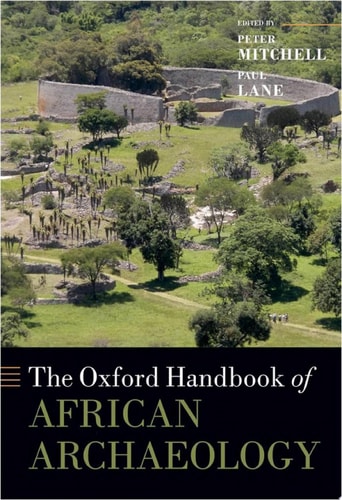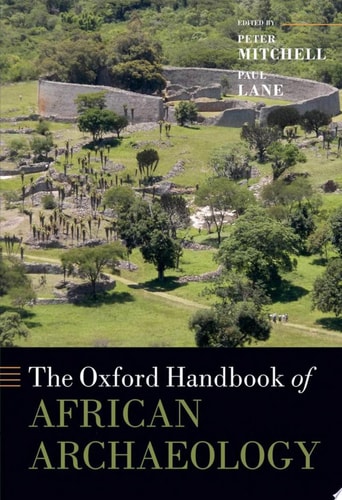
The Oxford Handbook of African Archaeology
0
0
As an Amazon Associate and affiliate partner, Menrva Books earns from qualifying purchases. Learn more
Author Description
Africa Has The Longest And Arguably The Most Diverse Archaeological Record Of Any Of The Continents. It Is Where The Human Lineage First Evolved And From Where Homo Sapiens Spread Across The Rest Of The World. Later, It Witnessed Novel Experiments In Food-production And Unique Trajectories To Urbanism And The Organisation Of Large Communities That Were Not Always Structured Along Strictly Hierarchical Lines. Millennia Of Engagement With Societies In Other Parts Of The World Confirm Africa's Active Participation In The Construction Of The Modern World, While The Richness Of Its History, Ethnography, And Linguistics Provide Unusually Powerful Opportunities For Constructing Interdisciplinary Narratives Of Africa's Past. This Handbook Provides A Comprehensive And Up-to-date Synthesis Of African Archaeology, Covering The Entirety Of The Continent's Past From The Beginnings Of Human Evolution To The Archaeological Legacy Of European Colonialism. As Well As Covering Almost All Periods And Regions Of The Continent, It Includes A Mixture Of Key Methodological And Theoretical Issues And Debates, And Situates The Subject's Contemporary Practice Within The Discipline's History And The Infrastructural Challenges Now Facing Its Practitioners. Bringing Together Essays On All These Themes From Over Seventy Contributors, Many Of Them Living And Working In Africa, It Offers A Highly Accessible, Contemporary Account Of The Subject For Use By Scholars And Students Of Not Only Archaeology, But Also History, Anthropology, And Other Disciplines.
Menrva's Summary
THE THESIS
This volume investigates the comprehensive archaeological record of the African continent, spanning from the origins of human evolution to the colonial era. Edited by Peter Mitchell and Paul Lane, the work synthesizes contributions from over seventy scholars to provide a multidisciplinary framework for understanding Africa's role in global history. The text argues that Africa's diverse archaeological evidence is central to understanding human development, social organization, and the construction of the modern world.
THE SCOPE MAP
What You Will Find
- Comprehensive coverage of African prehistory and historical archaeology.
- Analysis of food production experiments and non-hierarchical urbanism.
- Discussions on the intersection of archaeology, linguistics, and ethnography.
- Overviews of contemporary methodological and theoretical debates in the field.
Scope Limits
- The text does not provide an exhaustive site-by-site catalog of every excavation in Africa.
- It does not focus on speculative or non-archaeological interpretations of African history.
THE AUTHORITY PERSPECTIVE
Experts recognize this handbook as a foundational reference for students and researchers across multiple disciplines. Readers frequently note the academic density of the prose and the breadth of the regional coverage provided by the contributors.
Page Count:
1080
Publication Date:
2013-01-01
Publisher:
Oup Oxford
ISBN-10:
0191626147
ISBN-13:
9780191626142
African history
Archaeology
Anthropology