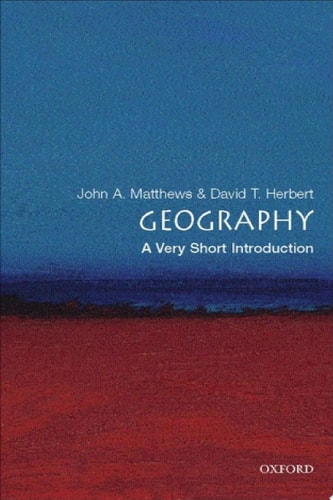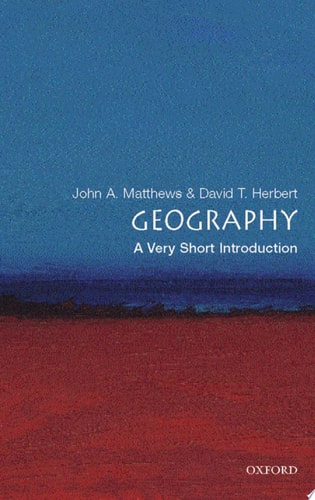
Geography: A Very Short Introduction
0
0
As an Amazon Associate and affiliate partner, Menrva Books earns from qualifying purchases. Learn more
Author Description
This Very Short Introduction answers four basic questions: what is Geography, how do geographers work, why is Geography important, and where is the discipline of Geography heading? Geography has always been important, though it has had only a short history as an academic discipline and is much misunderstood. Modern Geography has come a long way from its historical roots in exploring foreign lands, in mapping the world and in describing the physical and human features of the Earth's surface. There are two parts to the discipline: Physical Geography, which covers natural environments and landscapes; and Human Geography, which investigates people and the cultural landscape. Physical and human geographers commonly do not agree with each other. But there are also common elements and Geography as a whole has an important role as a bridge between the sciences and the humanities. Using wide-ranging examples, the book paints a broad picture of the current state of Geography, its subject matter, concepts and methods, how it developed, and its strengths and weaknesses. The book's conclusion is no less than a manifesto for Geography's future.About the Series: Combining authority with wit, accessibility, and style, Very Short Introductions offer an introduction to some of life's most interesting topics. Written by experts for the newcomer, they demonstrate the finest contemporary thinking about the central problems and issues in hundreds of key topics, from philosophy to Freud, quantum theory to Islam.
Menrva's Summary
THE THESIS
This book investigates the fundamental nature, methodology, and future trajectory of geography as a distinct academic discipline. Authors David T. Herbert and John A. Matthews utilize their expertise to bridge the traditional divide between physical and human geography. They argue that the field serves as a critical link between the sciences and the humanities, providing a framework for understanding the Earth's surface and the human experience within it.
THE SCOPE MAP
What You Will Find
- Historical evolution of geography from exploration to modern academic practice
- Distinction between physical geography and human geography
- Analysis of the conceptual and methodological tools used by geographers
- Discussion on the role of geography in addressing contemporary global issues
THE AUTHORITY PERSPECTIVE
Experts and educators frequently cite this work as a foundational text for students and newcomers to the field. Readers note the clarity of the prose, which effectively distills complex academic debates into an accessible overview.
Page Count:
181
Publication Date:
2008-07-20
Publisher:
Oxford University Press
ISBN-10:
0199211280
ISBN-13:
9780199211289
Science
Academic
Geography
Reference
Education