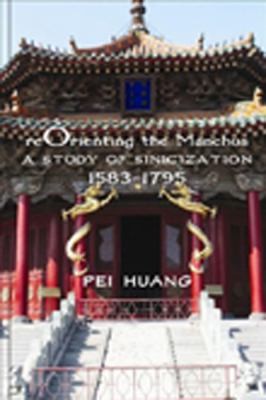
Reorienting The Manchus: A Study Of Sinicization, 1583-1795
0
0
As an Amazon Associate and affiliate partner, Menrva Books earns from qualifying purchases. Learn more
Author Description
Making extensive use of Chinese, Japanese, Manchu, and Western sources, the author adopts a historical multifaceted approach to explore the various forces geography, economics, frontier contacts, political and social institutions; language, literature and art; religion and Confucianism that made possible the Manchu adoption of Chinese ways of life.--Publisher's description.
Menrva's Summary
THE THESIS
This book investigates the complex process by which the Manchu rulers adopted Chinese culture and institutions during a pivotal period of their rule. Pei Huang, drawing on extensive Chinese, Japanese, Manchu, and Western sources, employs a multifaceted historical approach to examine the diverse forces that facilitated this Sinicization. The study explores geographical influences, economic factors, frontier interactions, and the impact of political and social institutions, alongside the roles of language, literature, art, religion, and Confucianism in shaping Manchu identity and governance.
THE SCOPE MAP
- Analysis of the geographical, economic, and frontier contact factors influencing Manchu adoption of Chinese ways.
- Examination of political and social institutions that facilitated cultural assimilation.
- Exploration of the role of language, literature, and art in the Sinicization process.
- Investigation into the impact of religion and Confucianism on Manchu rulers.
- Utilizes a wide array of Chinese, Japanese, Manchu, and Western sources.
- Presents a historical multifaceted approach to understanding cultural transformation.
THE AUTHORITY PERSPECTIVE
The book is a scholarly examination of Manchu Sinicization, likely appealing to specialists in East Asian history and cultural studies. Its reliance on diverse primary sources suggests a rigorous and comprehensive analysis of the historical forces at play. The detailed exploration of various cultural and institutional factors indicates a nuanced perspective on the complexities of cultural adoption and imperial governance during the Qing dynasty. The publisher's description highlights the book's depth and breadth in addressing a significant historical phenomenon.
Page Count:
374
Publication Date:
2011-01-01
ISBN-10:
1933947225
ISBN-13:
9781933947228
Non-Fiction
History
Asian Studies
Community Tags
Similar Books