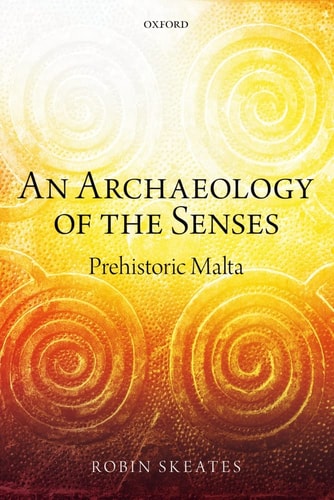
An Archaeology of the Senses: Prehistoric Malta
0
0
As an Amazon Associate and affiliate partner, Menrva Books earns from qualifying purchases. Learn more
Author Description
Despite the fundamental importance of the senses in human experience, archaeologists have, until recently, tended to neglect the abundant sensory dimensions of the material world they investigate, with the exception of the sense of sight, which has dominated archaeological theory and practice. In this book Robin Skeates establishes a well-defined methodology for an archaeology of the senses, produces a challenging new interpretative synthesis of Maltese prehistoric archaeology, and provides a rich archaeological case-study for the emergent interdisciplinary field of sensual culture studies. Using the combined methods of reflexivity, inventory, experimentation, thick description, and creative writing, Skeates explores the senses of sight, sound, smell and taste, touch, spatiality, the emotions, and their synaesthesthic interplay. Over space, three particular types of sensory domain are considered in detail within the wider context of the Maltese islandscape: dwelling places, monumental buildings, and the underworld. And over time the character, dynamism, and diversity of the successive sensual cultures of prehistoric Malta are defined.
Menrva's Summary
THE THESIS
This book investigates how the sensory experiences of prehistoric human populations can be reconstructed through the material record of Malta. Robin Skeates, a specialist in European prehistory, challenges the traditional archaeological focus on visual data by proposing a comprehensive methodology that incorporates the full spectrum of human perception. By integrating reflexivity, experimental archaeology, and thick description, the author argues that a multi-sensory approach provides a more nuanced understanding of how ancient societies interacted with their environment and built landscapes.
THE SCOPE MAP
What You Will Find
- A methodological framework for sensory archaeology including inventory and creative writing techniques.
- Analysis of prehistoric Maltese dwelling places, monumental architecture, and subterranean sites.
- Examination of the interplay between sight, sound, smell, taste, touch, and spatiality.
- A diachronic study of the evolution of sensual cultures across the Maltese islandscape.
THE AUTHORITY PERSPECTIVE
Experts recognize this work as a significant contribution to the burgeoning field of sensory studies within archaeology. Readers frequently note the academic rigor of the text, which serves as a foundational case study for applying multi-sensory methodologies to prehistoric sites.
Page Count:
288
Publication Date:
2010-11-05
Publisher:
Oxford University Press
ISBN-10:
0199216606
ISBN-13:
9780199216604
History
Archaeology
Prehistoric
Anthropology
Community Tags
Similar Books