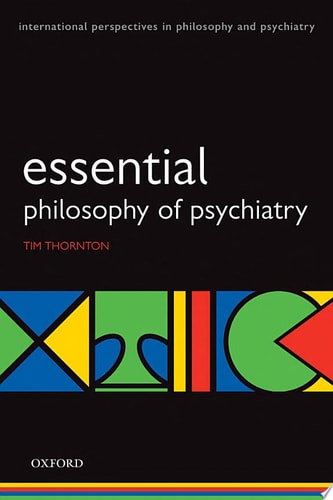
Essential Philosophy of Psychiatry
0
0
As an Amazon Associate and affiliate partner, Menrva Books earns from qualifying purchases. Learn more
Author Description
Essential Philosophy of Psychiatry is a concise introduction to the growing field of philosophy of psychiatry. Divided into three main aspects of psychiatric clinical judgement, values, meanings and facts, it examines the key debates about mental health care, and the philosophical ideas and tools needed to assess those debates, in six chapters.In addition to outlining the state of play, Essential Philosophy of Psychiatry presents a coherent and unified approach across the different debates, characterized by a rejection of reductionism and an emphasis on the ineliminability of uncodified skilled judgement.The first part, Values, outlines the debate about whether diagnosis of mental illness is essentially value-laden and argues that the prospects for reducing illness or disease to plainly factual matters are poor. It also explains the important role of skilled contextual judgement, rather than a principles-based deduction, in ethical judgement.The second part, Meanings, examines the central role of understanding and a shared first person perspective, both against attempts to reduce meaning to basic information-processing mechanisms and to explain away the difficulties of understanding psychopathology in recent models of delusion.The third part, Facts, shows the importance of uncodified clinical judgements, both in assessing the validity of psychiatric taxonomy and in the application of Evidence Based Medicine. Despite advances in the codifaction of practice and operationalism of diagnosis, an element of judgement remains in the assessment both of what, at one level, is good evidence for diagnosis and treatment and what, at a higher level, is good evidence for the validity of classification overall.
Menrva's Summary
THE THESIS
This book investigates the philosophical foundations of psychiatric practice, questioning whether mental health diagnosis can be reduced to purely factual, objective data. Author Tim Thornton, a prominent voice in the philosophy of medicine, utilizes a framework that prioritizes uncodified clinical judgement over rigid, principles-based deduction. By examining the intersection of values, meanings, and facts, the text argues against reductionist models in favor of a more nuanced, context-dependent approach to psychiatric care.
THE SCOPE MAP
What You Will Find
- Analysis of the value-laden nature of psychiatric diagnosis and the limitations of purely factual reductionism.
- Examination of the role of shared first-person perspectives in understanding psychopathology versus mechanistic information-processing models.
- Evaluation of the necessity of uncodified clinical judgement in the application of Evidence Based Medicine and psychiatric taxonomy.
- A unified philosophical approach that rejects reductionism in favor of skilled, contextual clinical decision-making.
THE AUTHORITY PERSPECTIVE
Experts recognize this work as a significant contribution to the International Perspectives in Philosophy and Psychiatry series, noting its utility for both clinicians and philosophers. Readers frequently highlight the clarity of the prose despite the inherent complexity of the subject matter.
Page Count:
280
Publication Date:
2007-10-25
Publisher:
Oxford University Press
ISBN-10:
019922871X
ISBN-13:
9780199228713
Philosophy
Medical Ethics
Psychiatry
Mental Health
Community Tags
Similar Books