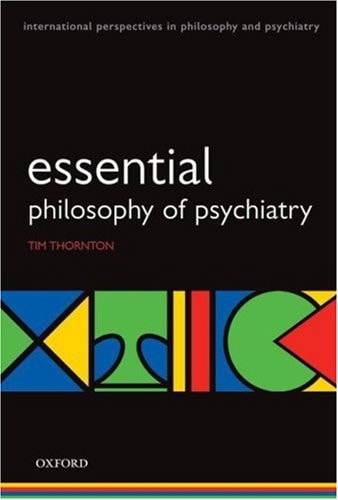
Essential Philosophy of Psychiatry
0
0
As an Amazon Associate and affiliate partner, Menrva Books earns from qualifying purchases. Learn more
Author Description
Essential Philosophy of Psychiatry is a concise introduction to the growing field of philosophy of psychiatry. Divided into three main aspects of psychiatric clinical judgement, values, meanings and facts, it examines the key debates about mental health care, and the philosophical ideas and tools needed to assess those debates, in six chapters. In addition to outlining the state of play, Essential Philosophy of Psychiatry presents a coherent and unified approach across the different debates, characterized by a rejection of reductionism and an emphasis on the ineliminability of uncodified skilled judgement. The first part, Values, outlines the debate about whether diagnosis of mental illness is essentially value-laden and argues that the prospects for reducing illness or disease to plainly factual matters are poor. It also explains the important role of skilled contextual judgement, rather than a principles-based deduction, in ethical judgement. The second part, Meanings, examines the central role of understanding and a shared first person perspective, both against attempts to reduce meaning to basic information-processing mechanisms and to explain away the difficulties of understanding psychopathology in recent models of delusion. The third part, Facts, shows the importance of uncodified clinical judgements, both in assessing the validity of psychiatric taxonomy and in the application of Evidence Based Medicine. Despite advances in the codifaction of practice and operationalism of diagnosis, an element of judgement remains in the assessment both of what, at one level, is good evidence for diagnosis and treatment and what, at a higher level, is good evidence for the validity of classification overall.
Menrva's Summary
THE THESIS
This book investigates the core question of how philosophical inquiry informs and improves psychiatric clinical judgment. Author Tim Thornton, a philosopher specializing in the conceptual foundations of mental health, argues that psychiatric practice cannot be reduced to purely factual or algorithmic data. He presents a framework that emphasizes the necessity of uncodified, skilled human judgment in navigating the complex intersection of values, meanings, and facts within clinical settings.
THE SCOPE MAP
What You Will Find
- A tripartite analysis of psychiatric judgment covering values, meanings, and facts.
- A critique of reductionist models in mental health care.
- An examination of the role of Evidence Based Medicine in psychiatric taxonomy.
Scope Limits
- The text does not provide a comprehensive history of psychiatric diagnostic manuals.
- It does not offer clinical treatment protocols or therapeutic techniques for specific disorders.
THE AUTHORITY PERSPECTIVE
Experts and practitioners frequently cite this work as a foundational text for understanding the conceptual underpinnings of modern psychiatry. Readers often note the academic density of the prose, which requires a background in philosophical reasoning to fully synthesize the author's arguments regarding clinical judgment.
Page Count:
216
Publication Date:
2007-10-05
Publisher:
Oxford University Press
ISBN-10:
0191754536
ISBN-13:
9780191754531
Philosophy
Methods
Psychiatry
Mental Illness
Medical Ethics
Philosophy Medical
Medical
Mental Health
Community Tags
Similar Books