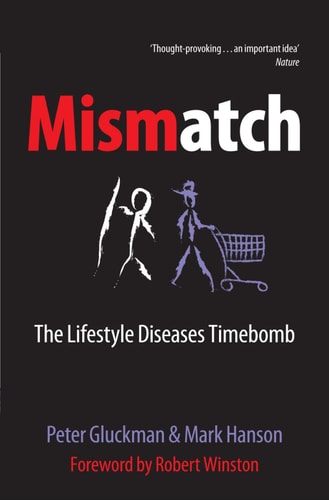
Mismatch: The Lifestyle Diseases Timebomb
0
0
As an Amazon Associate and affiliate partner, Menrva Books earns from qualifying purchases. Learn more
Author Description
Our bodies evolved to allow our ancestors the best chance of survival as hunter-gatherers in the Savannah. Our brains, on the other hand, have allowed us to develop complex societies, cultures, and lifestyles, far removed from those of our ancestors. As a result, write Peter Gluckman and Mark Hanson in Mismatch, we have created a modern, artificial world that is painfully out of tune with our evolved bodies.In a compelling narrative that begins with the Sherpa in Nepal, Gluckman and Hanson, both leading medical scientists, draw on the latest research, bringing together concepts from evolutionary biology, developmental science, medicine, anthropology and ecology to describe the nature of this mismatch, its consequences, and how we may counter it. The authors reveal that this mismatch has led to the current deadly explosion in "lifestyle" diseases such as diabetes and obesity, and it may well lead to increasingly frequent epidemics. There are broader consequences too for societies, such as the falling age of puberty, with its attendant mismatch with psychological maturity, and at the other end of life, the implications of increasing longevity. Is there any way out? Yes, say the authors. They propose that intervention in early human development, alongside a better focus on the health of potential mothers, can make future generations better suited to the modern world.In this remarkable and lucidly written book, Gluckman and Hanson identify a profound and growing problem that we ignore at our peril.
Menrva's Summary
THE THESIS
This book investigates the biological and societal consequences of the disconnect between our evolutionary history as hunter-gatherers and the demands of the modern, artificial environment. Mark Hanson and Peter Gluckman, both distinguished medical scientists, synthesize data from evolutionary biology, developmental science, and anthropology to construct their argument. They posit that the rapid shift in human lifestyle has outpaced our biological adaptation, resulting in a surge of chronic conditions. The authors propose that targeted interventions during early development and maternal health are essential strategies for mitigating these long-term health risks.
THE SCOPE MAP
What You Will Find
- Analysis of the evolutionary mismatch between hunter-gatherer physiology and modern urban environments.
- Examination of the rise in lifestyle-related conditions such as obesity and diabetes.
- Discussion of developmental biology and the impact of early-life interventions on long-term health outcomes.
- Exploration of societal shifts including the changing age of puberty and the implications of increased human longevity.
THE AUTHORITY PERSPECTIVE
Experts and readers frequently cite this work as a clear, accessible synthesis of complex biological and medical concepts for a general audience. The text is recognized for its interdisciplinary approach, effectively bridging the gap between evolutionary theory and contemporary public health policy.
Page Count:
285
Publication Date:
2008-04-07
Publisher:
Oxford University Press
ISBN-10:
0199228388
ISBN-13:
9780199228386
Science
Health
Sociology
Anthropology
Evolution
Medicine
Evolutionary Biology
Community Tags
Similar Books