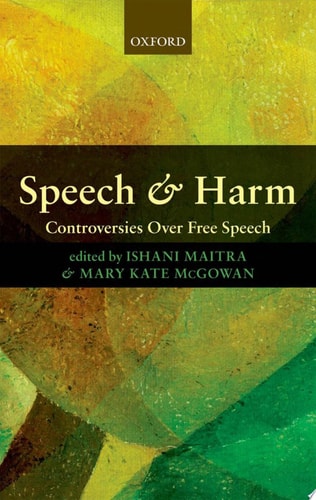
Speech and Harm: Controversies Over Free Speech
0
0
As an Amazon Associate and affiliate partner, Menrva Books earns from qualifying purchases. Learn more
Author Description
Most liberal societies are deeply committed to a principle of free speech. At the same time, however, there is evidence that some kinds of speech are harmful in ways that are detrimental to important liberal values, such as social equality. Might a genuine commitment to free speech require that we legally permit speech even when it is harmful, and even when doing so is in conflict with our commitment to values like equality? Even if such speech is to be legally permitted, does our commitment to free speech allow us to provide material and institutional support to those who would contest such harmful speech? And finally, and perhaps most importantly, which kinds of speech are harmful in ways that merit response, either in the form of legal regulation or in some other form?This collection explores these and related questions. Drawing on expertise in philosophy, sociology, political science, feminist theory, and legal theory, the contributors to this book investigate these themes and questions. By exploring various categories of speech (including pornography, hate speech, Holocaust denial literature, "Whites Only" signs), and attending to the precise functioning of speech, the essays contained here shed light on these questions by clarifying the relationship between speech and harm. Understanding how speech functions can help us work out which kinds of speech are harmful, what those harms are, and how the speech in question brings them about. All of these issues are crucially important when it comes to deciding what ought to be done about allegedly harmful speech.
Menrva's Summary
THE THESIS
This collection investigates the complex tension between the liberal commitment to free speech and the potential for certain forms of expression to cause tangible social harm. Editors Ishani Maitra and Mary Kate McGowan assemble a multidisciplinary group of scholars to evaluate whether legal protections for speech can coexist with the pursuit of social equality. The contributors utilize frameworks from philosophy, sociology, and legal theory to determine how specific types of speech function and whether they warrant regulatory or institutional responses.
THE SCOPE MAP
What You Will Find
- Analysis of controversial speech categories including pornography, hate speech, and Holocaust denial literature.
- Philosophical and sociological frameworks for identifying the mechanisms of speech-induced harm.
- Examination of the conflict between liberal values of free expression and the protection of social equality.
- Discussion on the legitimacy of providing institutional support to counter harmful rhetoric.
THE AUTHORITY PERSPECTIVE
Scholars and students of political philosophy frequently cite this collection as a rigorous resource for understanding the intersection of speech acts and social impact. The text is noted for its interdisciplinary approach, providing a dense but structured analysis suitable for academic inquiry into legal and ethical theory.
Page Count:
256
Publication Date:
2012-07-26
Publisher:
Oxford University Press
ISBN-10:
0199236283
ISBN-13:
9780199236282
Philosophy
Legal Theory
Freedom of speech
Feminist Theory
Ethics
Sociology
Community Tags
Similar Books