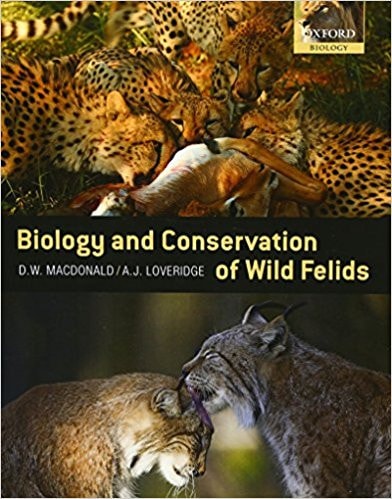
The Biology and Conservation of Wild Felids
0
0
As an Amazon Associate and affiliate partner, Menrva Books earns from qualifying purchases. Learn more
Author Description
The editors utilize their 50 years of combined experience in professional engagement with the behaviour and ecology of wild felids to draw together a unique network of the world's most respected and knowledgeable experts. For the first time, this inter-disciplinary research programme is brought together within a single volume. Beginning with a complete account of all 36 felid species, there follow 8 comprehensive review chapters that span all the topics most relevant to felid conservation science, including evolution and systematics, felid form and function, genetic applications, behavioural ecology, management of species that come into conflict with people and control of international trade in felid species, conservation tools/techniques, ex situ management, and felid diseases. 19 detailed case studies then delve deeply into syntheses of the very best species investigations worldwide, written by all the leading figures in the field. These chapters portray the unique attributes of the wild felids, describe their fascinating (and conflicting) relationship with humans, and create an unparalleled platform for future research and conservation measures. A final chapter analyses the requirements of, and inter-disciplinary approaches to, practical conservation with cutting-edge examples of conservation science and action that go far beyond the cat family.
Menrva's Summary
THE THESIS
This volume investigates the complex ecological requirements and conservation challenges facing the world's 36 wild felid species. Editors Andrew Loveridge and David B. MacDonald leverage decades of field experience to synthesize inter-disciplinary research, providing a comprehensive framework for understanding felid biology and the mitigation of human-wildlife conflict. The text serves as a central repository for current scientific knowledge, bridging the gap between theoretical evolutionary biology and practical conservation management.
THE SCOPE MAP
What You Will Find
- A systematic account of all 36 extant wild felid species.
- Eight comprehensive review chapters covering evolution, genetics, behavioral ecology, and disease management.
- Nineteen detailed case studies authored by leading field researchers.
- Analysis of inter-disciplinary conservation tools and strategies for managing human-felid interactions.
THE AUTHORITY PERSPECTIVE
Experts and researchers in the field of conservation biology recognize this work as a foundational reference for understanding the complexities of felid ecology. Readers frequently note the academic density of the prose, which provides a rigorous, data-driven overview suitable for professionals and advanced students of wildlife management.
Page Count:
736
Publication Date:
2010-01-01
Publisher:
Oxford University Press
ISBN-10:
0199234442
ISBN-13:
9780199234448
Nature
Science
Felidae
Nature conservation
Biology
Conservation
Ecology
Zoology
Community Tags
Similar Books