Worlds at War: The 2,500-Year Struggle Between East & West
0
0
As an Amazon Associate and affiliate partner, Menrva Books earns from qualifying purchases. Learn more
Author Description
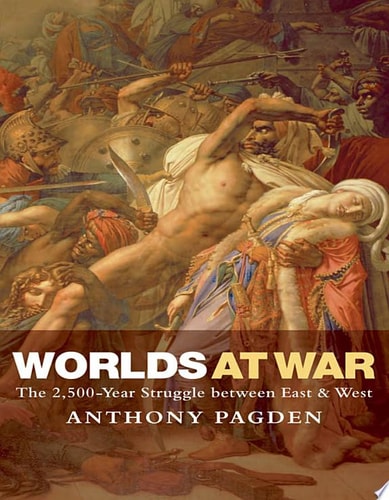
The differences that divide West from East go deeper than politics, deeper than religion, argues Anthony Pagden. To understand this volatile relationship, and how it has played out over the centuries, we need to go back before the Crusades, before the birth of Islam, before the birth of Christianity, to the fifth century BCE. Europe was born out of Asia and for centuries the two shared a single history. But when the Persian emperor Xerxes tried to conquer Greece, a struggle began which has never ceased. This book tells the story of that long conflict. First Alexander the Great and then the Romans tried to unite Europe and Asia into a single civilization. With the conversion of the West to Christianity and much of the East to Islam, a bitter war broke out between two universal religions, each claiming world dominance. By the seventeenth century, with the decline of the Church, the contest had shifted from religion to philosophy: the West's scientific rationality in contrast to those sought ultimate guidance it in the words of God. The eighteenth and nineteenth centuries witnessed the disintegration of the great Muslim empires - the Ottoman, the Mughal, and the Safavid in Iran - and the increasing Western domination of the whole of Asia. The resultant attempt to mix Islam and Western modernism sparked off a struggle in the Islamic world between reformers and traditionalists which persists to this day. The wars between East and West have not only been the longest and most costly in human history, they have also formed the West's vision of itself as independent, free, secular, and now democratic. They have shaped, and continue to shape, the nature of the modern world.
Menrva's Summary
THE THESIS
This book investigates the historical origins and persistent evolution of the ideological and geopolitical conflict between Eastern and Western civilizations over the past 2,500 years. Anthony Pagden, a distinguished historian of ideas, utilizes a vast chronological framework to argue that the divide is rooted in fundamental differences in philosophy, religion, and governance. By tracing the trajectory from the Greco-Persian Wars to modern secularism, he demonstrates how this ongoing friction has defined the identity of the West and shaped the contemporary global order.
THE SCOPE MAP
What You Will Find
- A comprehensive historical analysis spanning from the fifth century BCE to the modern era.
- Examination of the transition from religious conflict between Christianity and Islam to the clash between Western secular rationality and traditionalist Islamic thought.
- Historical case studies of the Persian Empire, the Roman Empire, and the decline of the Ottoman, Mughal, and Safavid empires.
- A thematic exploration of how external conflict has influenced the development of Western concepts of freedom, democracy, and secularism.
THE AUTHORITY PERSPECTIVE
Scholars and readers frequently note the ambitious scope of Pagden's narrative, which synthesizes complex historical and philosophical threads into a cohesive argument. Experts highlight this as a significant contribution to understanding the long-term cultural tensions that continue to influence current international relations.
Page Count:
544
Publication Date:
2008-01-01
Publisher:
Oxford University Press
ISBN-10:
0199237433
ISBN-13:
9780199237432
Religion
History
Philosophy
East and West
International relations
Imperialism
Islamic Countries
Christianity and other religions
World history
Europe
Community Tags
Similar Books