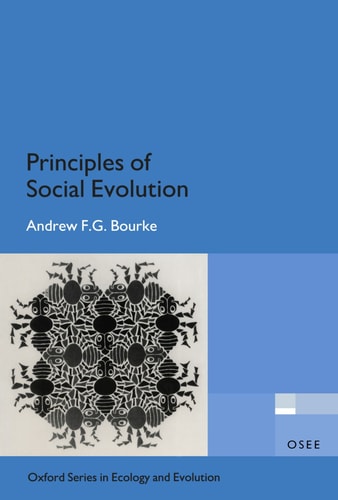
Principles of Social Evolution
0
0
As an Amazon Associate and affiliate partner, Menrva Books earns from qualifying purchases. Learn more
Author Description
Living things are organized in a hierarchy of levels. Genes group together in cells, cells group together in organisms, and organisms group together in societies. Even different species form mutualistic partnerships. Throughout the history of life, previously independent units have formed groups that, in time, have come to resemble individuals in their own right. Evolutionary biologists term such events "the major transitions". The process common to them all is social evolution. Each transition occurs only if natural selection favors one unit joining with another in a new kind of group.This book presents a fresh synthesis of the principles of social evolution that underlie the major transitions, explaining how the basic theory underpinning social evolution - inclusive fitness theory - is central to understanding each event. The book defines the key stages in a major transition, then highlights the shared principles operating at each stage across the transitions as a whole. It addresses in new ways the question of how, once they have arisen, organisms and societies become more individualistic.
Menrva's Summary
THE THESIS
This book investigates the underlying principles of social evolution that govern the major transitions in the history of life. Andrew F.G. Bourke, a specialist in evolutionary biology, synthesizes inclusive fitness theory to explain how independent biological units—from genes to cells to organisms—coalesce into higher-level individuals. The text provides a unified framework for understanding the selective pressures that drive these transitions and the subsequent evolution of individuality within societies.
THE SCOPE MAP
What You Will Find
- A comprehensive analysis of the major transitions in evolution, including the origins of cells, multicellularity, and eusociality.
- The application of inclusive fitness theory as a primary explanatory tool for social cooperation.
- A structured definition of the key stages involved in the transition from independent units to integrated, individualistic groups.
- Theoretical exploration of how natural selection favors the formation of mutualistic partnerships and complex societies.
THE AUTHORITY PERSPECTIVE
Experts recognize this work as a significant synthesis that bridges disparate areas of evolutionary study through a consistent theoretical lens. Readers frequently note the academic density of the prose, which is intended for students and researchers familiar with evolutionary biology and population genetics.
Page Count:
288
Publication Date:
2011-03-01
Publisher:
Oxford University Press
ISBN-10:
0199231168
ISBN-13:
9780199231164
Science
Evolutionary Biology
Biology
Ecology
Community Tags
Similar Books