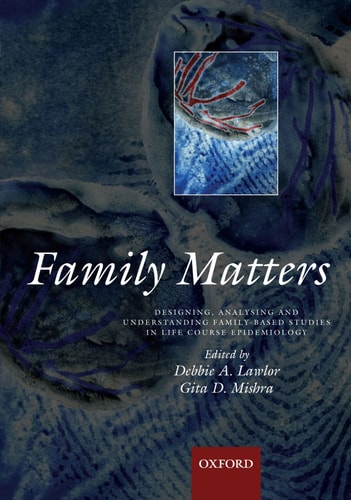
Family Matters: Designing, Analysing and Understanding Family Based Studies in Life Course Epidemiology
0
0
As an Amazon Associate and affiliate partner, Menrva Books earns from qualifying purchases. Learn more
Author Description
Family-based studies, including intergenerational, sibling, and twin studies, are increasingly being used to explore life course epidemiology. However, there are issues relating to study design and the statistical analysis of family-based studies that are still not well understood, and comprehending the underlying assumptions of these studies and drawing the inferences from them can be complex.This book provides the knowledge and skills required to design, analyse, and correctly interpret family-based studies. It explains what these studies can tell us about life course epidemiology; provides practical guidance on how to set-up and maintain birth cohorts for completing family-based studies in life course epidemiology; describes how to undertake appropriate statistical analyses of family-based studies and correctly interpret results from these analyses; and provides examples that illustrate the ways in which family-based studies can enhance our understanding of life course epidemiology. In addition, there is discussion of difficulties specific to setting up such studies in low- and middle-income countries, and issues relating to proxy informants, where parents provide information on children and vice versa, or siblings provide information about each other. Examples of how family-based studies have been used in understanding the life course epidemiology of cardiovascular disease, mental health, and reproductive health illustrate the applicability of the research to these areas, but also more generally to the wider field of life course epidemiology.
Menrva's Summary
THE THESIS
This book investigates the methodological complexities and analytical requirements for conducting family-based studies within the field of life course epidemiology. Authors Deborah A. Lawlor and Gita D. Mishra draw upon their extensive expertise in public health and longitudinal research to provide a comprehensive framework for researchers. The text addresses the inherent challenges of intergenerational, sibling, and twin study designs, offering a structured approach to data interpretation and the mitigation of common statistical biases.
THE SCOPE MAP
What You Will Find
- Practical guidance on establishing and maintaining birth cohorts for longitudinal research.
- Methodologies for statistical analysis specific to family-based data structures.
- Discussion of challenges regarding proxy informants and data collection in low
- and middle-income countries.
- Case studies applying family-based research to cardiovascular, mental, and reproductive health outcomes.
THE AUTHORITY PERSPECTIVE
Experts recognize this volume as a technical resource for epidemiologists and biostatisticians navigating the complexities of familial data. Readers frequently note the academic density of the prose, which serves as a foundational reference for researchers designing rigorous life course studies.
Page Count:
352
Publication Date:
2009-11-16
Publisher:
Oxford University Press
ISBN-10:
0199231036
ISBN-13:
9780199231034
Science
Family Health
Public Health
Epidemiology
Statistics
Medical research
Community Tags
Similar Books