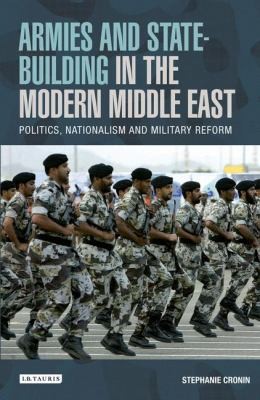
Armies and Statebuilding in the Modern Middle East: Politics, Nationalism and Military Reform
0
0
As an Amazon Associate and affiliate partner, Menrva Books earns from qualifying purchases. Learn more
Author Description
The uprisings of 2011, which erupted so unexpectedly and spread across the Middle East, once again propelled the armies of the region to the centre of the political stage. Throughout the region, the experience of the first decade of the twenty-first century provides ample reason to re-examine Middle Eastern armies and the historical context which produced them. By adding an historical understanding to a contemporary political analysis, Stephanie Cronin examines the structures and activities of Middle Eastern armies and their role in state- and empire-building. Focusing on Iran, Afghanistan and Saudi Arabia, Armies, Tribes and States in the Middle East presents a clear and concise analysis of the nature of armies and the differing guises military reform has taken throughout the region. Covering the region from the birth of modern armies there in the late-nineteenth and early-twentieth centuries, to the military revolutions of the 1950s and 60s and on to the twenty-first century army-building exercises seen in Iraq and Afghanistan, Cronin provides a unique and vital presentation of the role of the military in the modern Middle East.
Menrva's Summary
THE THESIS
This book investigates the historical role of armies in state-building and military reform across the modern Middle East. Stephanie Cronin, drawing on her expertise in Middle Eastern history and politics, analyzes the structures and activities of armies in Iran, Afghanistan, and Saudi Arabia. The work traces the evolution of these military forces from their origins in the late 19th and early 20th centuries through the significant military shifts of the 1950s and 60s, up to contemporary army-building efforts in Iraq and Afghanistan. By integrating historical context with contemporary political analysis, the book offers a comprehensive examination of the military's influence on regional state formation.
THE SCOPE MAP
- Analysis of military structures and activities in Iran, Afghanistan, and Saudi Arabia.
- Historical examination of military reform across the Middle East from the late 19th century to the 21st century.
- Coverage of key periods including the birth of modern armies, the military revolutions of the 1950s and 60s, and recent army-building exercises.
- Exploration of the role of armies in state
- and empire-building in the region.
- Integration of historical understanding with contemporary political analysis.
THE AUTHORITY PERSPECTIVE
The book is recognized for its historical depth and analytical rigor in examining the complex relationship between armies and state-building in the Middle East. It is noted for its focus on specific case studies like Iran, Afghanistan, and Saudi Arabia, providing a nuanced understanding of military reform across different national contexts. The work is valued for bridging historical perspectives with current political events, particularly in light of the region's uprisings. Scholars and students of Middle Eastern politics and military history find it an essential resource for comprehending the enduring influence of armed forces on regional development.
Page Count:
320
Publication Date:
2013-01-01
ISBN-10:
1780767390
ISBN-13:
9781780767390
Politics
Science
Non-Fiction
History
Sociology
Military History
Community Tags
Similar Books