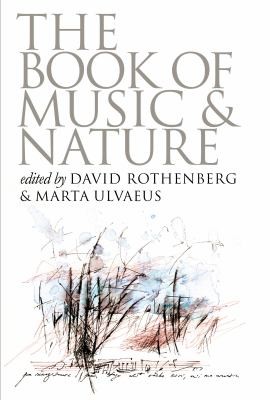
The Book of Music and Nature: An Anthology of Sounds, Words, Thoughts
0
0
As an Amazon Associate and affiliate partner, Menrva Books earns from qualifying purchases. Learn more
Author Description
Some say music is the universal language. This couldn't possibly be true. Not everyone speaks it; not all understand it. And even those who do cannot explain what it says. No one knows how music speaks, what tales it tells, how it tugs at our emotions with its mixture of tones, one after another, above and below. You can be moved by music and have absolutely no idea what is going on. Language is not like that. You must be able to speak a language to know what is being said. Music is only in part a language, that part you understand when you learn its rules and how to bend those rules. But the rest of it may move us even though we are unable to explain why. Nature is one such place. It can mean the place we came from, some original home where, as Nalungiaq the Netsilik Eskimo reminds us, "people and animals spoke the same language." Not only have we lost that language, we can barely imagine what it might be. Words are not the way to talk to animals. They'd rather sing with us--if we learn their tunes without making them conform to ours. Music could be a model for learning to perceive the surrounding world by listening, not only by naming or explaining.
Menrva's Summary
THE THESIS
The Book of Music and Nature explores the profound, often ineffable connections between the sonic landscapes of the natural world and human musical expression.
THE SCOPE MAP
- Explores the idea that music, unlike spoken language, can move us without explicit understanding.
- Discusses the concept of a lost primordial language where humans and animals communicated freely.
- Presents music as a potential model for perceiving the world through listening rather than solely through naming or explanation.
- Features essays and thoughts from various contributors on the intersection of sound, nature, and music.
- Examines how learning the 'tunes' of nature can lead to a deeper connection with the environment.
- Considers the limitations of language in conveying emotional and experiential truths, contrasting it with the power of music.
THE AUTHORITY PERSPECTIVE
This anthology is likely to appeal to readers interested in the philosophical underpinnings of music and its relationship with the natural world. The collection's focus on listening and non-linguistic communication suggests a contemplative and interdisciplinary approach. It offers a unique perspective on how we perceive and interact with our environment through sound. The contributors' diverse backgrounds likely provide a rich tapestry of ideas on the subject.
Page Count:
260
Publication Date:
2009-01-01
ISBN-10:
0819569356
ISBN-13:
9780819569356
Non-Fiction
Philosophy
Music
Nature
Essays
Community Tags
Similar Books