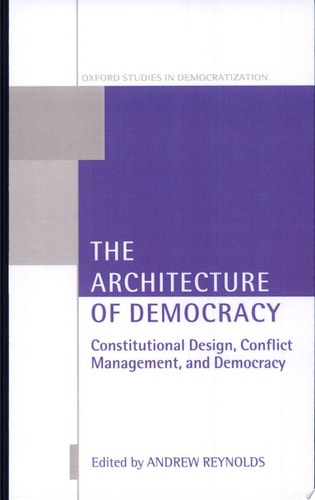
The Architecture of Democracy: Constitutional Design, Conflict Management, and Democracy
0
0
As an Amazon Associate and affiliate partner, Menrva Books earns from qualifying purchases. Learn more
Author Description
In this fascinating exploration of democracy, Reynolds assembles prominent scholars to discuss the successes and failures of constitutional design. Chapters analyze the effects of presidential and parliamentary systems, issues of federalism and autonomy, and the varying impact of electoral systems, concluding with notable case studies of Fiji, Ireland, Eritrea, Indonesia, Nigeria, and India. The culmination of the study of constitutional engineering in the third wave of democracy, this important work sets parameters for crucial research as democracy diffuses across the world.
Menrva's Summary
THE THESIS
This book investigates the extent to which constitutional design and institutional engineering influence the stability and success of democratic governance in diverse political contexts. Andrew Reynolds, a scholar specializing in democratization and electoral systems, compiles research from various experts to evaluate how specific structural choices—such as presidential versus parliamentary systems and federalist arrangements—shape the trajectory of emerging democracies. By synthesizing theoretical frameworks with empirical data, the text provides a comprehensive assessment of how institutional architecture can mitigate or exacerbate conflict in divided societies.
THE SCOPE MAP
What You Will Find
- Comparative analysis of presidential and parliamentary systems
- Examination of federalism and regional autonomy as conflict management tools
- Evaluation of electoral system impacts on political representation
- Case studies covering Fiji, Ireland, Eritrea, Indonesia, Nigeria, and India
THE AUTHORITY PERSPECTIVE
Experts recognize this volume as a significant contribution to the field of constitutional engineering and democratization studies. Readers frequently note the academic density of the prose, which serves as a foundational text for students and practitioners analyzing the mechanics of democratic transition.
Page Count:
507
Publication Date:
2002-05-23
Publisher:
Oxford University Press
ISBN-10:
0199246459
ISBN-13:
9780199246458
Constitutions
Democracy
International relations
Constitutional Law
Government