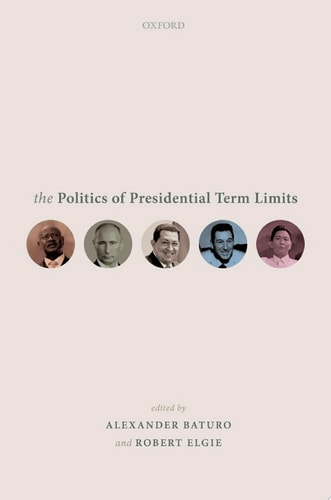
The Politics of Presidential Term Limits
0
0
As an Amazon Associate and affiliate partner, Menrva Books earns from qualifying purchases. Learn more
Author Description
Presidential term limits restrict the maximum length of time that presidents can serve in office. They stipulate the length of term the presidents can serve between elections and the number of terms that presidents are permitted to serve. While comparative scholarship has long studied important institutions such presidentialism vs. parliamentarism and the effects of different electoral systems, we lack a comprehensive understanding of the role and effects of presidential term limits. Yet presidential term limits and term lengths are one of the most fundamental institutions of democracy. By ensuring compulsory rotation in office, they are at the heart of a democratic dilemma. What is the appropriate trade-off between allowing the unrestricted selection of candidates at presidential elections vs. restricting selection procedures to prevent the possibility of dictatorial takeover by presidents who are unwilling to step down? In the context of a long and on-going history of changes to presidential term limits and the many and varied ways in which term limits have been both applied and avoided, this book explains the factors behind the introduction, stability, abolition, and avoidance of presidential term limits, as well as the consequences of changes to presidential term limits, and it does so in the context of non-democracies, third-wave countries, and consolidated democracies. It includes comparative, theoretical, and practitioner-oriented chapters, as well as detailed country case studies of presidential term limits across the world and over time.
Menrva's Summary
THE THESIS
This book investigates the institutional role, origins, and consequences of presidential term limits within diverse political systems. Authors Alexander Baturo and Robert Elgie analyze the democratic dilemma inherent in balancing voter choice against the prevention of executive overreach. By synthesizing theoretical frameworks with empirical data, the authors examine why nations choose to implement, maintain, abolish, or circumvent these critical constitutional constraints.
THE SCOPE MAP
What You Will Find
- Comparative analysis of term limit stability across non-democracies, third-wave countries, and consolidated democracies.
- Theoretical models explaining the introduction and abolition of executive tenure restrictions.
- Detailed country case studies illustrating varied applications and avoidance strategies.
Scope Limits
- The text does not provide a prescriptive manual for drafting specific constitutional language.
- It does not focus on local or municipal executive term limits, concentrating exclusively on presidential offices.
THE AUTHORITY PERSPECTIVE
Scholars identify this work as a comprehensive reference for understanding the institutional mechanics of executive power. Experts frequently highlight the book's utility in bridging the gap between theoretical political science and practical governance.
Page Count:
665
Publication Date:
2019-01-01
Publisher:
OUP Oxford
ISBN-10:
0192574353
ISBN-13:
9780192574350
Comparative Government
Public Policy
International relations
Comparative Politics
Democracy
Government
Community Tags
Similar Books