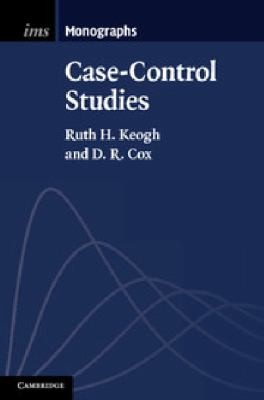
Case-Control Studies
0
0
As an Amazon Associate and affiliate partner, Menrva Books earns from qualifying purchases. Learn more
Author Description
The case-control approach is a powerful method for investigating factors that may explain a particular event. It is extensively used in epidemiology to study disease incidence, one of the best-known examples being the investigation by Bradford Hill and Doll of the possible connection between cigarette smoking and lung cancer. More recently, case-control studies have been increasingly used in other fields, including sociology and econometrics. With a particular focus on statistical analysis, this book is ideal for applied and theoretical statisticians wanting an up-to-date introduction to the field. It covers the fundamentals of case-control study design and analysis as well as more recent developments, including two-stage studies, case-only studies and methods for case-control sampling in time. The latter have important applications in large prospective cohorts that require case-control sampling designs to make efficient use of resources. More theoretical background is provided in an appendix for those new to the field
Menrva's Summary
THE THESIS
The case-control approach offers a potent methodology for dissecting the origins of specific events, particularly in fields like epidemiology. This book, by David R. Cox, delves into the statistical underpinnings of this method, which is crucial for understanding disease incidence and has found applications beyond epidemiology in areas such as sociology and econometrics. It provides a comprehensive overview of both fundamental principles and advanced techniques, including two-stage studies, case-only studies, and efficient sampling designs for large cohorts. The text is designed for statisticians seeking an updated introduction to the field, with theoretical background support available in an appendix.
THE SCOPE MAP
- Fundamentals of case-control study design and analysis
- Recent developments in case-control methodology
- Two-stage studies
- Case-only studies
- Methods for case-control sampling in time
- Applications in large prospective cohorts
- Statistical analysis focus
- Theoretical background in appendix
THE AUTHORITY PERSPECTIVE
This book is presented as an ideal resource for applied and theoretical statisticians seeking an up-to-date introduction to case-control studies. The publisher's description highlights its comprehensive coverage of both foundational concepts and contemporary advancements in the field. The focus on statistical analysis suggests it is a rigorous text for those engaged in research design and interpretation. The inclusion of theoretical background material in an appendix indicates a commitment to providing a thorough understanding for newcomers to the methodology.
Page Count:
285
Publication Date:
2014-01-01
ISBN-10:
1107019567
ISBN-13:
9781107019560
Non-Fiction
Science
Research Methods
Statistics
Epidemiology
Community Tags
Similar Books