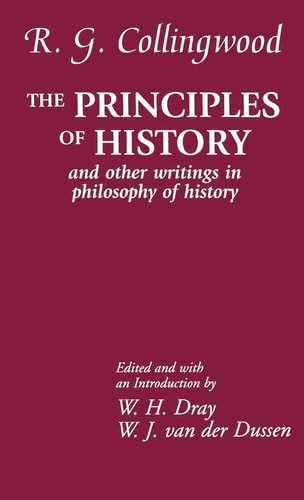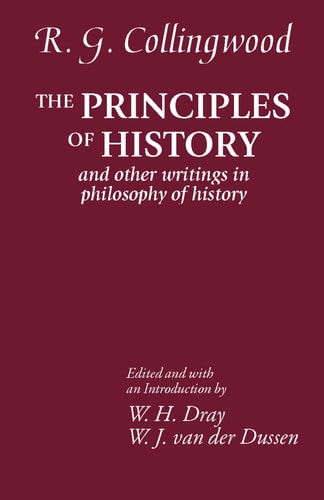
The Principles of History: And Other Writings in Philosophy of History
0
0
As an Amazon Associate and affiliate partner, Menrva Books earns from qualifying purchases. Learn more
Author Description
Published here for the first time is much of a final and long-anticipated work on the philosophy of history by the great Oxford philosopher and historian R. G. Collingwood (1889-1943). The original text of this uncompleted work has only recently been discovered and is accompanied here by Collingwood's shorter writings on historical knowledge and inquiry. Besides containing entirely new ideas, these incredible writings discuss many of the issues which Collingwood famously raised in The Idea of History and in his Autobiography. This book also includes two conclusions written by Collingwood, which were eventually revised and published as The Idea of Nature. and a lengthy editorial introduction that puts Collingwood's writings in their context and discusses the philosophical questions they initiate. A landmark publication, this work will appeal not only to those studying Collingwood but also to anyone broadly curious about philosophy of history.
Menrva's Summary
THE THESIS
This volume investigates the fundamental nature of historical knowledge and the philosophical principles that govern the study of the past. R. G. Collingwood, a prominent Oxford philosopher and historian, presents a rigorous framework for understanding how historians reconstruct human experience. By analyzing the logic of historical inquiry, the author argues that history is a distinct form of thought that requires the active participation of the historian's mind to interpret evidence and understand human action.
THE SCOPE MAP
What You Will Find
- A previously unpublished manuscript on the philosophy of history.
- A collection of shorter essays detailing Collingwood's views on historical inquiry.
- Editorial commentary contextualizing the development of Collingwood's thought.
- Comparative analysis between these writings and his established works, such as The Idea of History.
THE AUTHORITY PERSPECTIVE
Scholars and students of philosophy frequently identify this text as a critical addition to the Collingwood canon, providing necessary depth to his earlier published theories. The prose is noted for its academic density and requires a foundational understanding of twentieth-century British philosophy to fully grasp the nuances of the author's arguments.
Page Count:
384
Publication Date:
2001-05-03
Publisher:
Clarendon Press
ISBN-10:
0199243158
ISBN-13:
9780199243150
Non-Fiction
Philosophy
History
Historiography
History
Community Tags
Similar Books