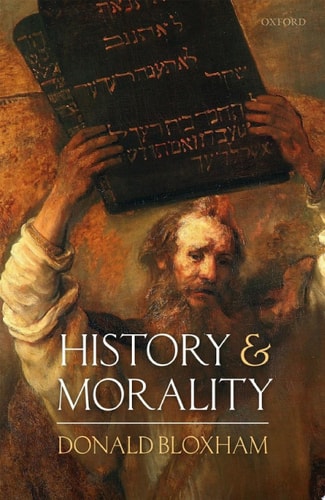
History and Morality
0
0
As an Amazon Associate and affiliate partner, Menrva Books earns from qualifying purchases. Learn more
Author Description
Against majority opinion within his profession, Donald Bloxham argues that it is legitimate, often unavoidable, and frequently important for historians to make value judgements about the past. History and Morality draws on a wide range of historical examples, and its author's insights as a practicing historian. Examining concepts like impartiality, neutrality, contextualisation, and the use and abuse of the idea of the past as a foreign country, Bloxham's book investigates how far tacit moral judgements infuse works of history, and how strange those histories would look if the judgements were removed. The author argues that rather than trying to eradicate all judgemental elements from their work, historians need to think more consistently about how, and with what justification, they make the judgements that they do. The importance of all this lies not just in the responsibilities that historians bear towards the past - responsibilities to take historical actors on those actors' own terms and to portray the impact of those actors' deeds - but also in the role of history as a source of identity, pride, and shame in the present. The account of moral thought in History and Morality has ramifications far beyond the activities of vocational historians.
Menrva's Summary
THE THESIS
Donald Bloxham investigates the legitimacy and necessity of moral judgment within the practice of professional historical writing. Bloxham, a historian, challenges the prevailing academic consensus that demands total neutrality, arguing that value judgments are inherent to the discipline. He posits that historians should move away from the impossible goal of eradication and instead focus on developing a consistent, justified framework for the moral assessments they inevitably make.
THE SCOPE MAP
What You Will Find
- Analysis of concepts including impartiality, neutrality, and contextualization.
- Examination of the 'past as a foreign country' trope.
- Discussion on the role of history in shaping contemporary identity, pride, and shame.
Scope Limits
- Does not provide a universal moral code for all historical events.
- Does not focus on specific regional history, but rather the methodology of historical practice.
THE AUTHORITY PERSPECTIVE
Scholars and students of historiography frequently cite this work for its direct challenge to traditional notions of historical objectivity. Readers often note the dense, academic nature of the prose, which serves as a significant contribution to the philosophy of history.
Page Count:
336
Publication Date:
2020-01-01
Publisher:
OUP Oxford
ISBN-10:
0192602322
ISBN-13:
9780192602329
History
Non-Fiction
Philosophy
History
Ethics
Historiography
Community Tags
Similar Books