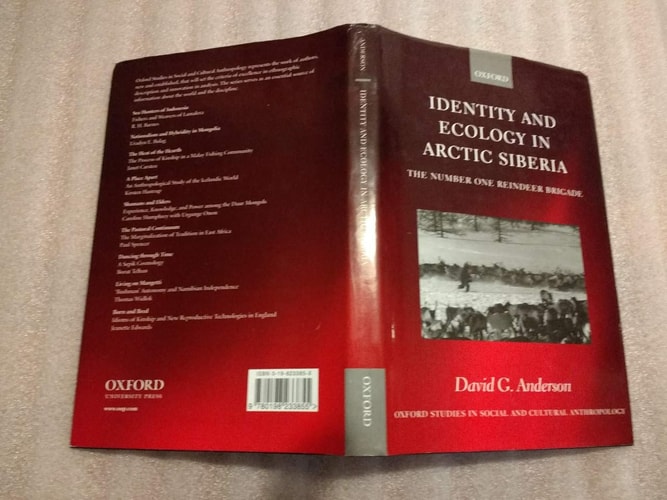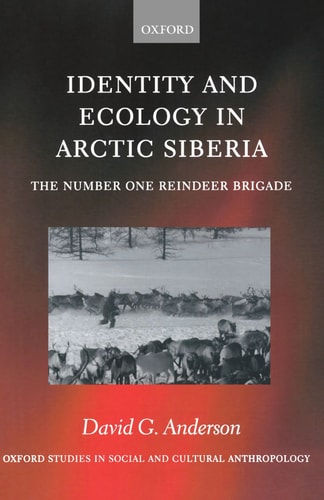
Identity and Ecology in Arctic Siberia: The Number One Reindeer Brigade
0
0
As an Amazon Associate and affiliate partner, Menrva Books earns from qualifying purchases. Learn more
Author Description
This is a first-hand account of a reindeer-herding collective in the remote Taimyr peninsula of Siberia. The author gives an intimate description of the day-to-day lives of a little-known group of Evenkis as they face both economic and ecological challenges. His study addresses questions of identity, nationalism, and ecological theory, as well as mapping the changes caused in the region by the formation of and the recent break-up of the Soviet Union.
Menrva's Summary
THE THESIS
This study investigates how the Evenki reindeer-herding collectives of the Taimyr peninsula navigate the intersection of cultural identity, ecological adaptation, and political upheaval. David G. Anderson, an anthropologist with extensive field experience, utilizes a longitudinal ethnographic framework to document the lives of Siberian herders. He examines the transition from Soviet-era collective management to the post-Soviet economic landscape, arguing that local identity is inextricably linked to the management of the Arctic environment. The text provides a detailed analysis of how these communities maintain social cohesion amidst shifting national policies and environmental pressures.
THE SCOPE MAP
What You Will Find
- Ethnographic analysis of the Taimyr peninsula reindeer-herding collectives.
- Theoretical frameworks regarding the relationship between human identity and Arctic ecology.
- Primary source observations of Evenki daily life and labor practices.
- Historical documentation of the impact of the Soviet Union's formation and subsequent dissolution on indigenous social structures.
THE AUTHORITY PERSPECTIVE
Scholars in the field of social anthropology frequently cite this work as a foundational text for understanding post-Soviet indigenous life. Readers often note the academic density of the prose, which provides a rigorous examination of both ecological theory and regional history.
Page Count:
272
Publication Date:
2002-04-25
Publisher:
Oxford University Press
ISBN-10:
0199250820
ISBN-13:
9780199250820
Anthropology
Sociology
Social Science
Ecology
Ethnography
Siberia
Social Life
Ethnology russia federation siberia