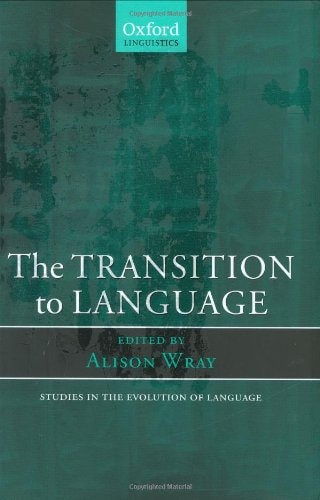
The Transition to Language
0
0
As an Amazon Associate and affiliate partner, Menrva Books earns from qualifying purchases. Learn more
Author Description
Linguists, biological anthropologists, and cognitive scientists come together in this book to explore the origins and early evolution of phonology, syntax, and semantics. They consider the nature of pre- and proto-linguistic communication, the internal and external triggers that led to its transformation into language, and whether and how language may be considered to have evolved after its inception. Evidence is drawn from many domains, including computer simulations of language emergence, the songs of finches, problem-solving abilities in monkeys, sign language, and the structure of languages today.
Menrva's Summary
THE THESIS
This book investigates the complex evolutionary processes and cognitive triggers that facilitated the transition from pre-linguistic communication to structured human language. Alison Wray, a prominent scholar in the field of language evolution, curates a multidisciplinary collection of research that bridges biological anthropology, cognitive science, and linguistics. The text synthesizes diverse methodologies to argue that language emergence is not a singular event but a multi-faceted development involving both internal cognitive shifts and external environmental pressures.
THE SCOPE MAP
What You Will Find
- Analysis of the origins of phonology, syntax, and semantics.
- Comparative studies involving animal communication, including finch song and primate problem-solving.
- Application of computer simulations to model the emergence of linguistic structures.
- Examination of sign language and modern linguistic architecture as evidence for evolutionary pathways.
THE AUTHORITY PERSPECTIVE
Experts recognize this volume as a foundational interdisciplinary resource for understanding the biological and cognitive constraints of language evolution. Readers frequently note the academic density of the prose, which is tailored for researchers and students in the fields of evolutionary linguistics and anthropology.
Page Count:
424
Publication Date:
2002-05-23
Publisher:
Oxford University Press
ISBN-10:
0199250650
ISBN-13:
9780199250653
Science
Evolutionary Biology
Anthropology
Linguistics
Community Tags
Similar Books