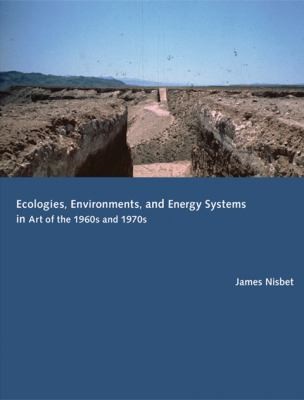
Ecologies, Environments, and Energy Systems in Art of the 1960s and 1970s
0
0
As an Amazon Associate and affiliate partner, Menrva Books earns from qualifying purchases. Learn more
Author Description
As the American environmental movement emerged in the 1960s and 1970s, ecological perspectives also emerged in art. But ecological artworks were not limited to conventional understandings of environmental art as something that had to be located outdoors or made of organic materials. Created in a range of media, they reflected a widespread reconceptualization of the material world and a sense of the interconnectedness of all things. In this book, James Nisbet investigates the many levels of intersection between ecology and art in the 1960s and 1970s, examining a series of works that served as sensory interfaces to ecological concepts and reflected the shifting notions of ecology during the period. Nisbet first examines practices of land art that sought to revise the relationship of art to the biological world. He explores the all-but-forgotten genre of Environments, founded by Allan Kaprow, which produced both closed environments bounded by the gallery’s walls and psychedelic multimedia environments; and he examines the transition between minimalism and land art, considering the 'planetary visions' that cast singular objects within holistic ecosystems—a sensibility that infused such canonical earthworks as Michael Heizer’s Double Negative and Robert Smithson’s Spiral Jetty. Nisbet then turns to work informed by the language of energy and the ecological notion that all matter is in process, including Robert Barry’s radio wave installations and Simone Forti’s performances. Finally, he considers Walter De Maria’s The Lightning Field, finding in it a reflection of the conflicts within ecological thinking of the 1970s. Offering a radically new view of environmental art, Nisbet traces a cultural turn from an art that addresses artificially confined environments and simplified allegories of the planet to one that increasingly takes on the 'unruly complexities' of global ecologies.
Menrva's Summary
THE THESIS
This book investigates the intersection of ecological thought and artistic practice during the transformative decades of the 1960s and 1970s. James Nisbet, drawing on his expertise in art history, examines how artists responded to the burgeoning environmental movement by reconceptualizing the material world and the interconnectedness of all things. The book analyzes a range of artworks across various media, moving beyond conventional definitions of environmental art to explore how artists engaged with ecological concepts and the shifting scientific and cultural understandings of ecology during this period.
THE SCOPE MAP
- Analysis of land art practices that redefined the relationship between art and the natural world.
- Exploration of the 'Environments' genre, including Allan Kaprow's work and multimedia installations.
- Examination of the transition from minimalism to land art, focusing on 'planetary visions'.
- Discussion of artworks informed by energy concepts and the idea of matter in process, such as Robert Barry's installations and Simone Forti's performances.
- Consideration of Walter De Maria's 'The Lightning Field' as a reflection of 1970s ecological debates.
- A cultural history tracing a shift towards art that engages with the complexities of global ecologies.
THE AUTHORITY PERSPECTIVE
The book is regarded as a significant contribution to the understanding of environmental art, offering a novel perspective that moves beyond traditional interpretations. It is praised for its in-depth analysis of artworks that served as interfaces to ecological concepts and for its exploration of the period's evolving notions of ecology. The work is noted for its comprehensive scope, covering diverse artistic practices from land art to performance and installations, and for its insightful connection of these artistic expressions to broader cultural and scientific shifts.
Page Count:
288
Publication Date:
2014-01-01
ISBN-10:
0262026708
ISBN-13:
9780262026703
Art
History
Non-Fiction
Art History
Ecology
Cultural History
Community Tags
Similar Books














