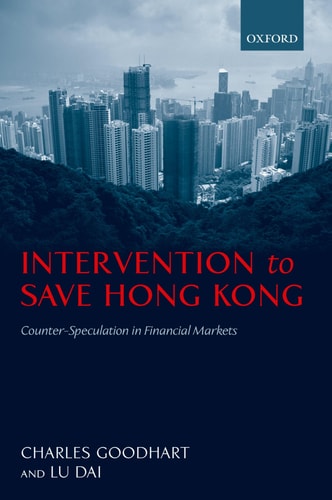
Intervention to Save Hong Kong: Counter-Speculation in Financial Markets
0
0
As an Amazon Associate and affiliate partner, Menrva Books earns from qualifying purchases. Learn more
Author Description
By August 1998, the Hong Kong economy had become threatened not only by the natural consequences of the Asian crisis (1997-98), but also by waves of speculation, betting that the authorities would be forced to abandon the linked exchange rate (to the US dollar). When facing previous speculative attacks (starting October 1997), the authorities had followed traditional policies of raising interest rates. But by August 1998, such policies had helped to batter asset markets; property prices and output were falling, and confidence was low. Moreover, the speculators had developed an ingenious 'double play', simultaneously selling both the foreign exchange market and the Hang Seng equity market short; whether the authorities used an interest rate defense, or abandoned the 'link', the speculators would gain either way. So, the authorities decided on a bold, unexpected and unconventional response to reports of a further attack. They would undertake counter-intervention, again both in the equity and foreign exchange markets. This book provides a fascinating story in itself, and insights into what lessons academics and practitioners can learn from the turbulent events of the time.
Menrva's Summary
THE THESIS
This book investigates the strategic rationale and economic consequences of the Hong Kong government's 1998 intervention to defend its currency peg against speculative market manipulation. The authors, Dai Lu and Professor Charles Goodhart, utilize a combination of historical analysis and financial theory to examine the limitations of traditional interest rate defenses during the Asian financial crisis. They argue that the 'double play' strategy employed by speculators necessitated a shift toward unconventional counter-intervention in both equity and foreign exchange markets to restore stability. By analyzing the specific mechanics of this intervention, the text provides a framework for understanding how authorities can respond to coordinated attacks on pegged exchange rates.
THE SCOPE MAP
What You Will Find
- Detailed analysis of the 1997-1998 Asian financial crisis and its impact on Hong Kong.
- Examination of the 'double play' speculative strategy involving foreign exchange and equity markets.
- Evaluation of the effectiveness of traditional interest rate policies versus direct market intervention.
- Lessons for policymakers and academics regarding market stability and currency defense mechanisms.
THE AUTHORITY PERSPECTIVE
Experts and financial historians recognize this work as a critical case study for understanding the complexities of currency pegs and speculative attacks. Readers frequently note the technical clarity with which the authors explain the interplay between equity markets and exchange rate policy during periods of extreme volatility.
Page Count:
224
Publication Date:
2003-07-24
Publisher:
Oxford University Press
ISBN-10:
0199261105
ISBN-13:
9780199261109
Economics
History
Asian Studies
Speculation
Financial Markets
Finance
Community Tags
Similar Books