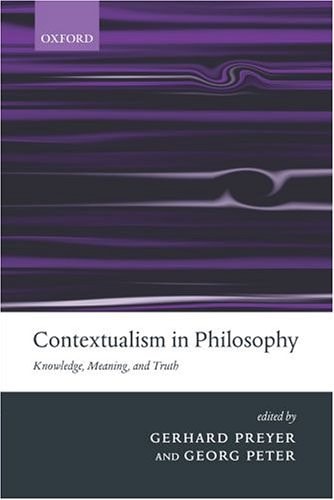
Contextualism in Philosophy: Knowledge, Meaning, and Truth
0
0
As an Amazon Associate and affiliate partner, Menrva Books earns from qualifying purchases. Learn more
Author Description
In epistemology and in philosophy of language there is fierce debate about the role of context in knowledge, understanding, and meaning. Many contemporary epistemologists take seriously the thesis that epistemic vocabulary is context-sensitive. This thesis is of course a semantic claim, so it has brought epistemologists into contact with work on context in semantics by philosophers of language. This volume brings together the debates, in a set of twelve specially written essays representing the latest work by leading figures in the two fields. All future work on contextualism will start here.Contributors:Kent Bach, Herman Cappelen, Andy Egan, Michael Glanzberg, John Hawthorne, Ernest Lepore, Peter Ludlow, Peter Pagin, Georg Peter, Paul M. Pietroski, Gerhard Preyer, Jonathan Schaffer, Jason Stanley, Brian Weatherson, Timothy Williamson
Menrva's Summary
THE THESIS
This volume investigates the extent to which epistemic vocabulary and semantic meaning are fundamentally dependent on contextual variables. Editors Georg Peter and Gerhard Preyer curate a collection of twelve original essays that bridge the gap between contemporary epistemology and the philosophy of language. By examining the claim that knowledge attributions are context-sensitive, the contributors analyze how linguistic frameworks shape our understanding of truth and meaning in philosophical discourse.
THE SCOPE MAP
What You Will Find
- Analysis of epistemic vocabulary and its sensitivity to context
- Theoretical intersections between semantic theory and epistemology
- Twelve original essays from prominent figures in philosophy of language
- Critical evaluation of current debates regarding truth conditions and meaning
THE AUTHORITY PERSPECTIVE
Experts identify this volume as a critical reference point for scholars engaged in the study of contextualism. Readers frequently note the high level of academic density, making it a foundational text for advanced students and researchers in the field.
Page Count:
416
Publication Date:
2005-09-29
Publisher:
Oxford University Press
ISBN-10:
0199267405
ISBN-13:
9780199267408
Philosophy
Truthfulness and falsehood
Academic
Knowledge Theory
Language
Semantics
Epistemology
Community Tags
Similar Books