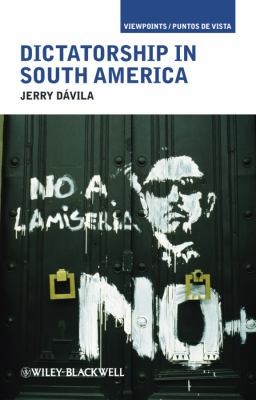
Dictatorship in South America
0
0
As an Amazon Associate and affiliate partner, Menrva Books earns from qualifying purchases. Learn more
Author Description
Assassination and political upheaval characterize the Cold War period in South America. Dictatorship in South America explores the Latin American experience of military dictatorship during this era, depicting citizens' relationship with the brutal juntas that cycled in and out of power. Focusing on the experiences of Brazil, Chile, and Argentina, Dictatorship in South America delves into the wider political aftermath of the Cuban Revolution, an event that captured the minds of the public and pushed political regimes toward greater conservatism. Dávila argues that the radical utopian dreams of students and workers in the aftermath of the Cuban Revolution, fuelled in later years by events in 1960s United States and Europe, were confronted by equally radical right-wing projects realized by the armed forces in Brazil, Chile and Argentina. Yet behind the appearance of order and progress promoted by the generals, whose unapologetic capitalism disguised unsustainable capital flight and exploitation, lay internal disorder, violence, and the systematic abuse of human rights: the 'disappeared' were a real social group, albeit defined by their absence and presumed deaths. This history of three countries' experience with dictatorship, economic crisis and grassroots re-democratization brings a new perspective to the study of modern Latin American history. -- Publisher's description.
Menrva's Summary
THE THESIS
This book investigates the nature and impact of military dictatorships in South America during the Cold War. Jerry Davila, drawing on extensive historical research, examines the complex relationship between citizens and the authoritarian regimes that governed Brazil, Chile, and Argentina. The book explores how the aftermath of the Cuban Revolution and global political shifts in the 1960s influenced both radical leftist movements and the conservative military responses that led to widespread human rights abuses and economic exploitation.
THE SCOPE MAP
- Analysis of military dictatorships in Brazil, Chile, and Argentina during the Cold War.
- Exploration of the political and social impact of the Cuban Revolution on South American regimes.
- Examination of the radical utopian dreams of students and workers versus right-wing military projects.
- Discussion of the economic policies, internal violence, and human rights abuses under these dictatorships.
- Focus on the concept of the 'disappeared' as a social group defined by absence.
- Insights into the process of grassroots re-democratization in these three nations.
THE AUTHORITY PERSPECTIVE
The book offers a new perspective on modern Latin American history by detailing the experiences of three countries with dictatorship, economic crisis, and eventual re-democratization. It highlights the stark contrast between the generals' promoted image of order and progress through unapologetic capitalism and the reality of internal disorder, violence, and systematic human rights abuses. The work is likely to be of interest to scholars and students of Latin American history, political science, and Cold War studies, providing a nuanced understanding of a turbulent period.
Page Count:
207
Publication Date:
2013-01-01
ISBN-10:
1405190566
ISBN-13:
9781405190565
Non-Fiction
Politics
History
South America
Community Tags
Similar Books