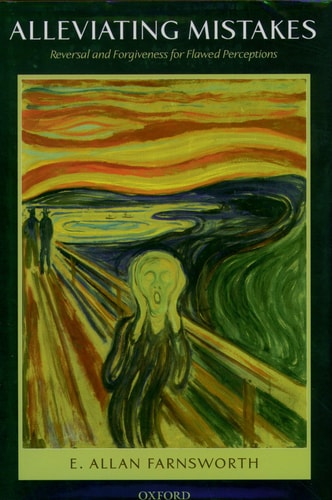
Alleviating Mistakes: Reversal and Forgiveness for Flawed Perceptions
0
0
As an Amazon Associate and affiliate partner, Menrva Books earns from qualifying purchases. Learn more
Author Description
How often our actions go awry because our perceptions are at odds with reality! This book examines the legal issues that arise when we seek to avoid the untoward consequences of an action by claiming that our perception was flawed. We all make mistakes. Some have unfortunate consequences: we might overpay a debt or make an unfavourable contract, or we might be sued or accused of a crime as a result of our mistake.Claims to alleviation on the grounds of mistake are likely to arise wherever the law prescribes a state of mind (some kind of intent) as a prerequisite for the application of a legal rule. This book asks when the fact that a person made a mistake should entitle them to alleviation. This may involve the intention to enter into a contract or a payment, in which case a person could seek its reversal, or it might involve the intent to commit a tort or crime, in which case they could seek forgiveness for the offence. Farnsworth defines 'alleviating' mistakes as those which entitle a person to relief from untoward consequences of their mistake.There is no general 'law of mistake', and despite their similarities, few discussions of mistake in one setting pause to consider mistakes in other contexts. The goals of fields as disparate as contracts and criminal law are very different: how do these differences affect the treatment of mistakes? Farnsworth sets out a new taxonomy of mistakes. His analysis reveals that over the past century, there has been a remarkable increase in the receptivity of courts and scholars to claims for both reversal and forgiveness--a waxing of alleviating mistakes.
Menrva's Summary
THE THESIS
This book investigates the legal criteria for determining when a mistake in perception should entitle an individual to relief from the resulting legal consequences. E. Allan Farnsworth, a distinguished legal scholar, examines the disparate treatment of mistakes across various legal domains, including contract law and criminal law. By analyzing the intersection of intent and reality, he proposes a new taxonomy to categorize how courts handle claims for reversal or forgiveness. The work argues that there has been a significant shift in judicial receptivity toward these claims over the last century.
THE SCOPE MAP
What You Will Find
- A comparative analysis of mistake doctrines in contract, tort, and criminal law.
- A proposed taxonomy for classifying different types of alleviating mistakes.
- Historical review of judicial trends regarding mistake-based relief over the past century.
- Examination of the relationship between intent requirements and legal liability.
THE AUTHORITY PERSPECTIVE
Legal scholars and practitioners frequently cite this work as a foundational text for understanding the fragmented nature of mistake doctrine across different legal fields. Experts highlight the author's ability to synthesize complex, disparate legal rules into a coherent framework for future analysis.
Page Count:
230
Publication Date:
2004-12-09
Publisher:
Oxford University Press
ISBN-10:
0199276110
ISBN-13:
9780199276110
Mistake Law
Jurisprudence
Legal Theory
Law
Criminal Law
Contract law
Community Tags
Similar Books