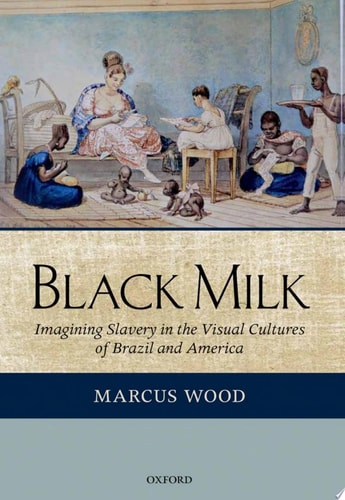
Black Milk: Imagining Slavery in the Visual Cultures of Brazil and America
0
0
As an Amazon Associate and affiliate partner, Menrva Books earns from qualifying purchases. Learn more
Author Description
Black Milk is the first in-depth analysis of the visual archives that effloresced around slavery in Brazil and North America in the eighteenth and nineteenth centuries. In its latter stages the book also explores the ways in which the museum cultures of North America and Brazil have constructed slavery over the last hundred years. These institutional legacies emerge as startlingly different from each other at almost every level.Working through comparative close readings of a myriad art objects - including prints, photographs, oil paintings, watercolours, sculptures, ceramics, and a host of ephemera -- Black Milk celebrates just how radically alternative Brazilian artistic responses to Atlantic slavery were. Despite its longevity and vastness, Brazilian slavery as a cultural phenomenon has remained hugely neglected, in both academic and popular studies, particularly when compared to North American slavery. Consequently much of Black Milk is devoted to uncovering, celebrating, and explaining the hidden treasury of visual material generated by artists working in Brazil when they came to record and imaginatively reconstruct their slave inheritance. There are painters of genius (most significantly Jean Baptiste Debret), printmakers (discussion is focused on Angelo Agostini the "Brazilian Daumier") and some of the greatest photographers of the nineteenth century, led by Augusto Stahl. The radical alterity of the Brazilian materials is revealed by comparing them at every stage with a series of related but fascinatingly and often shockingly dissimilar North American works of art. Black Milk is a mold-breaking study, a bold comparative analysis of the visual arts and archives generated by slavery within the two biggest and most important slave holding nations of the Atlantic Diaspora.
Menrva's Summary
THE THESIS
This work investigates how the visual archives of slavery in Brazil and North America differ in their construction, representation, and institutional legacy. Marcus Wood, a scholar of visual culture and slavery, utilizes a comparative framework to analyze how these two nations recorded and reconstructed their slave inheritance through art. By contrasting Brazilian artistic responses with those of the United States, the book argues that Brazilian visual culture offers a radically alternative perspective on the Atlantic slave trade that has been historically overlooked.
THE SCOPE MAP
What You Will Find
- Comparative analysis of visual archives from the eighteenth and nineteenth centuries in Brazil and North America.
- Examination of museum cultures and institutional memory regarding slavery over the last century.
- Close readings of diverse art objects including prints, photographs, oil paintings, sculptures, and ceramics.
- Critical focus on specific artists such as Jean Baptiste Debret, Angelo Agostini, and Augusto Stahl.
THE AUTHORITY PERSPECTIVE
Experts identify this text as a significant contribution to the comparative study of Atlantic slavery and visual culture. Readers frequently note the academic density of the prose and the depth of the archival research presented by the author.
Page Count:
552
Publication Date:
2013-07-12
Publisher:
Oxford University Press
ISBN-10:
0199274576
ISBN-13:
9780199274574
History
Slavery
Brazil
Art History
Slavery_brazil
United States
Community Tags
Similar Books