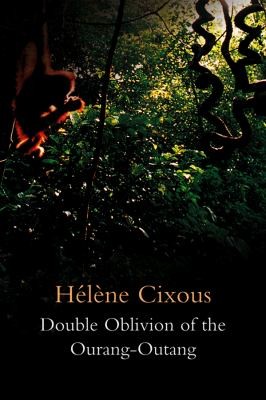
Double Oblivion of the Ourang-Outang
0
0
As an Amazon Associate and affiliate partner, Menrva Books earns from qualifying purchases. Learn more
Author Description
In 2009, the writer-narrator finds a Box. Within it lie the pages of her very first manuscript, pages she thought she had long since thrown away. Le Prénom de Dieu was the text that marked the start of her prodigious career, and yet for the narrator it is also the Nameless Book, the-Book-that-could-never-be-read, the book written by someone other than her. Now, once again, it heralds a beginning, as its discovery is the start of a journey into the past. The title, with its reference to the murderous Ourang-Outang of Edgar Allan Poeʹs The Murders in the Rue Morgue, sets the scene: this is a detective story haunted by literary ghosts. At the very heart of literature lies the fascination with the enigma, the search for something that has been lost. Cixous illustrates this as she leads her reader on a hunt for the ultimate hidden treasure, in the company of an array of venerable predecessors from Saint-Simon, Proust and Stendhal to Shackleton, Poe and Jacques Derrida. -- Publisher description.
Menrva's Summary
THE PULSE
A writer confronts the ghost of her first manuscript, a text she cannot recognize as her own. The narrator discovers her long-lost debut novel, a work she considers unreadable and written by another self. This discovery propels her on a retrospective investigation into her past and the very nature of literary creation, a quest framed by the enigma of lost things and literary ghosts, drawing parallels to detective narratives. She navigates this internal landscape with the company of literary and historical figures, exploring the elusive search for hidden meaning within texts and herself.
INSIDE THE PAGES
- Exploration of the author's early literary identity and the concept of the 'other self' in writing.
- The manuscript acts as a catalyst for a journey into the narrator's past.
- Literary allusions and intertextuality, referencing authors like Poe, Proust, and Derrida.
- Thematic focus on enigma, loss, and the search for hidden meaning.
- A narrative structure that blends memoir, literary criticism, and fictional exploration.
- The title's reference to Edgar Allan Poe's 'The Murders in the Rue Morgue' frames the narrative as a literary detective story.
- Examination of the relationship between an author and their work over time.
THE COLLECTIVE ECHO
The publisher's description frames this work as a profound literary investigation into authorship and memory, suggesting a text that engages deeply with literary history and the self. The narrative's structure, which intertwines personal discovery with intellectual exploration, points to a work that appeals to readers interested in the craft of writing and the philosophical underpinnings of literature. The references to a diverse array of historical and literary figures indicate a rich intertextual dialogue. This approach suggests a book that is likely to be appreciated for its intellectual depth and its unique perspective on the creative process.
Page Count:
172
Publication Date:
2013-01-01
ISBN-10:
074565391X
ISBN-13:
9780745653914
Biography
Literary Fiction
Fiction
Autobiographical fiction
Experimental
Community Tags
Similar Books