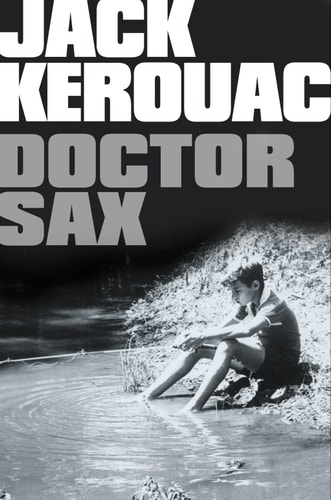
Doctor Sax: Faust Part Three
0
0
As an Amazon Associate and affiliate partner, Menrva Books earns from qualifying purchases. Learn more
Author Description
Doctor Sax (Doctor Sax: Faust Part Three) is a novel by Jack Kerouac published in 1959. Kerouac wrote it in 1952 while living with William S. Burroughs in Mexico City. The novel was written quickly in the improvisatory style Kerouac called “spontaneous prose.” In a letter to Allen Ginsberg dated May 18, 1952, Kerouac wrote, “I’ll simply blow [improvise like a jazz musician] on the vision of the Shadow in my 13th and 14th years on Sarah Ave. Lowell, culminated by the myth itself as I dreamt it in Fall 1948... angles of my hoop-rolling boyhood as seen from the shroud.” In a letter to Ginsberg dated November 8 of the same year, Kerouac admits “Doctor Sax was written high on tea [marijuana] without pausing to think, sometimes Bill [Burroughs] would come in the room and so the chapter ended there,...” (ibid, p. 185).
Menrva's Summary
THE PULSE
A young boy growing up in Lowell, Massachusetts, navigates the boundary between his mundane childhood and a dark, supernatural mythology centered on the enigmatic figure of Doctor Sax. Jack Duluoz, the protagonist, attempts to reconcile his daily life of hoop-rolling and neighborhood exploration with the encroaching shadows of a cosmic, apocalyptic threat. He faces the psychological pressures of adolescence while simultaneously engaging with a dream-like, gothic narrative that manifests in his own imagination. The story utilizes a non-linear, stream-of-consciousness framework that mirrors the erratic and vivid nature of memory and hallucination.
INSIDE THE PAGES
- Spontaneous prose style characterized by long, rhythmic sentences and jazz-like improvisation.
- Heavy use of surrealist imagery and dream-logic sequences.
- Integration of autobiographical elements from the author's childhood in Lowell.
- Gothic atmosphere featuring a mysterious, cloaked antagonist known as the Shadow.
- Episodic narrative structure that shifts between reality and fantasy.
- Dense, lyrical language that emphasizes sensory experience over traditional plot progression.
- Exploration of the transition from childhood innocence to adolescent awareness.
- Meta-fictional references to the act of writing and the creative process.
THE COLLECTIVE ECHO
This work is frequently cited as one of the most distinct examples of the author's experimental phase, showcasing his commitment to the spontaneous prose method. Critics often highlight the text's dense, hallucinatory quality as a departure from his more grounded travel narratives. The novel is regarded as a complex psychological portrait that captures the specific anxieties of youth through a lens of dark fantasy. Readers often find the narrative challenging due to its lack of conventional structure, yet it remains a significant piece for those interested in the stylistic evolution of the Beat movement.
Page Count:
208
Publication Date:
1959-01-01
Publisher:
Harper Perennial
ISBN-10:
000720499X
ISBN-13:
9780007204991
Experimental
Coming of Age
Autobiographical fiction
Surrealism
Literature & Fiction
Contemporary
Community Tags
Similar Books